Blogs

10 Best Second Hand Containers for Sale Worldwide?

Buying second hand containers can reduce project costs, but the cheapest unit is rarely the best choice. Condition, location, certification, and transport distance all influence the final value. This guide examines 10 best second hand containers for sale worldwide, covering practical options for storage, workshops, modular offices, and approved cargo use.

Christian Roeloffs, co-founder and CEO of Container xChange, has said, “Transparency is essential when buying and selling containers.” That principle matters during every inspection. Buyers should photograph the container’s exterior, doors, roof, floor, and corner castings before payment. A valid CSC plate may be necessary for international shipping, while storage projects often require different specifications. Confirm the unit’s age, previous use, dimensions, and repair history. Ask whether delivery includes unloading.

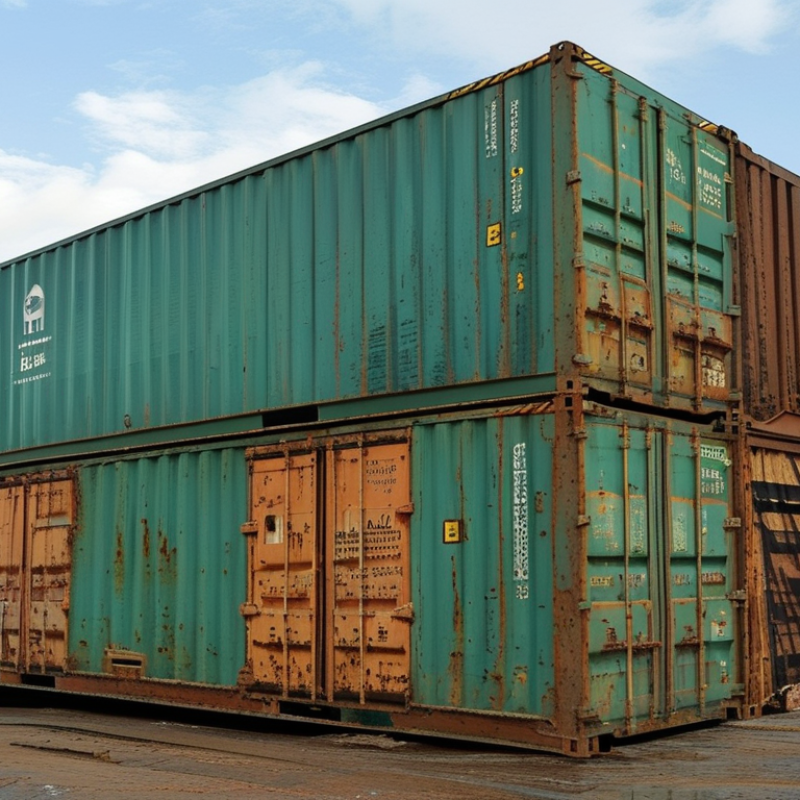
Look closely at rust around the bottom rails. Check the door seals with daylight behind them. A clean-looking floor can still hide moisture damage. These details separate dependable second hand containers from expensive problems. Steel thickness, plywood condition, ventilation, and wind-and-watertight performance also deserve attention.

Supplier reputation matters. Request inspection reports, clear pricing, and written delivery terms. Independent verification is helpful when the purchase crosses borders. No checklist is perfect. I have seen attractive photographs hide bent doors and patched roofs. A cautious buyer leaves room for mistakes, unexpected repairs, and local handling costs. The right container is not merely cheap; it fits its intended use, site conditions, and compliance requirements.
10 Best Second Hand Containers for Sale Worldwide?

Global Demand Context: UNCTAD’s ~80% Sea-Trade Share and Used Boxes

UNCTAD reports that more than 80% of global merchandise trade by volume moves by sea. That figure explains the continuing demand for second-hand containers. Each port cycle creates equipment that may be retired locally but remains useful elsewhere. Used boxes can support storage, farming, construction, and legitimate cargo operations.

A practical shortlist covers standard dry, high-cube, refrigerated, open-side, open-top, flat-rack, tank, insulated, swap-body, and storage units. The best choice depends on cargo, route, climate, and handling equipment. Inspect corner posts, floor boards, door seals, welds, and roof patches. Check the identification plate and available inspection records. A clean exterior can hide corrosion beneath fresh paint. That mistake is common.

Global demand is uneven. Export hubs may offer better prices, while inland buyers may pay more for delivery. Compare the box price with inland haulage, lifting fees, and modification costs. Refrigerated units need a documented power test. Open-top units need careful roof-cover checks. Storage units may not suit international shipping. Buyers should confirm local import, safety, and placement requirements before payment. No checklist catches everything. A second inspection can reveal overlooked damage. A low quote is not proof of value. A cheaper box with weak doors can become an expensive repair.

How to read this chart: These are ten widely traded second-hand ISO container configurations, compared by nominal external length. Twenty-foot units are commonly chosen for compact cargo, while forty-foot and high-cube units provide more capacity. Refrigerated, open-top, and flat-rack containers serve specialized cargo requirements.
Global context: UNCTAD reports that roughly 80% of international trade by volume is transported by sea, supporting sustained worldwide demand for standard and specialized containers.
Sources: UNCTAD, Review of Maritime Transport; ISO container size and type conventions. Lengths shown are nominal external lengths.

ISO 668 Sizes and CSC 1972 Rules for Ranking Second-Hand Containers

10 Best Second Hand Containers for Sale Worldwide?

ISO 668 should guide the first ranking decision. Standard 20-foot units measure about 6,058 millimetres long, while 40-foot units measure about 12,192 millimetres. Both usually measure 2,438 millimetres wide and 2,591 millimetres high. Dimensions can vary slightly within permitted tolerances, so buyers should verify the door opening, floor length, and corner fittings.

CSC 1972 compliance matters more than fresh paint. A valid safety approval plate records the container’s identification, maximum gross mass, and examination details. The first inspection is generally required within five years. Later examinations normally occur within 30 months, unless an approved continuous examination programme applies. I would rank containers with readable plates, matching serial numbers, dry interiors, straight corner posts, and undamaged locking bars above cheaper units with uncertain histories.

12.3
UNCTAD’s Review of Maritime Transport 2024 reported that seaborne trade reached approximately 12.3 billion tonnes in 2023, after growing 2.4 percent.

That scale keeps second-hand equipment important for storage and transport. The report also states that more than 80 percent of global merchandise trade by volume moves by sea. However, market demand does not make every used container suitable. A recent repaint may hide corrosion around the roof seam. I once treated surface appearance as evidence of quality; that was too optimistic. Inspection photographs, CSC records, and a practical water test deserve greater weight than a low advertised price.

The 10 Best Used Containers by Grade, Age, Dimensions, and Cargo Use

Choosing the 10 best used containers depends on grade, age, dimensions, and cargo use. Cargo-worthy units are reliable for regular shipping, with sound doors, floors, and locking bars. Wind-and-water-tight containers suit warehouse storage when minor dents are acceptable. As-is units cost less, but they need careful inspection and repair planning.

For compact loads, used 20-foot standard containers are practical and easier to place on small sites. A 40-foot standard model carries more pallets, while a 40-foot high-cube adds valuable vertical space. Older units can work for tools, machinery, or seasonal goods, provided corrosion remains limited. Newer used units usually offer cleaner floors and fewer door problems. Age alone is not enough.

High-cube containers fit tall cartons and lightweight bulky cargo.

Open-top units help load goods with cranes, although their covers require close inspection. Refrigerated containers can support temperature-sensitive cargo, but their cooling systems demand professional testing. Flat-rack units handle oversized machinery when approved lifting points are available.

Inspect the roof, underside, corner posts, door seals, and floor from several angles. A clean photograph can hide rust underneath.

I once underestimated floor damage after viewing only the exterior. That mistake changed my inspection checklist.

Ask for recent photographs, service records, internal measurements, and a written condition report before paying. Weight limits, local placement rules, and delivery access also affect the real value.

Regional Price, Supply, and Repositioning Data for Worldwide Buyers

10 Best Second Hand Containers for Sale Worldwide?

Regional price differences shape every second-hand container purchase. A 20-foot standard unit often costs about USD 1,200 to 3,000 near major export ports. A 40-foot high cube may range from USD 1,800 to 4,500. Prices usually rise inland because trucking, storage, and depot handling add hidden costs. Supply is often stronger in import-heavy areas. Export shortages can change prices within weeks. Buyers should request recent photos, inspection records, dimensions, and floor condition before paying.

The ten most practical choices include 20-foot standard, 40-foot standard, high cube, refrigerated, insulated, open-top, flat-rack, side-opening, tunnel-door, and office-converted units. Standard dry containers offer the broadest supply and simplest repositioning. High cubes suit bulky cargo. Reefers require careful checks on power systems and insulation. Specialty units may look affordable, but repairs can erase the saving. Check the doors closely. Rust around corner posts deserves attention.

Repositioning data can reveal better deals than local listings. A surplus unit near a large European or Asian port may travel to an inland African, Middle Eastern, or South American market. That move only works when freight rates, empty-equipment availability, and destination demand align. I have seen buyers focus on purchase price and underestimate inland delivery. That is a common mistake. Currency changes, seasonal cargo flows, and port congestion also affect the final budget. A modestly damaged unit may still serve storage needs, but export use demands stricter documentation and safety verification.

10 Best Second Hand Containers for Sale Worldwide? - Regional Price, Supply, and Repositioning Data for Worldwide Buyers
Rank Used Container Type Typical External Size Best Use Case Indicative Used Price (USD) Regional Market with Strongest Supply Estimated Supply Common Repositioning Lane Indicative Repositioning Budget per Unit (USD) Typical Condition Buyer Consideration
1 20-Foot Standard Dry Container 6.06 m × 2.44 m × 2.59 m General storage, workshops, construction materials, and small-volume cargo $1,200–$2,800 North Europe, East Asia, and North America High Major port to inland depot within the same country or trading region $250–$750 Cargo-worthy to wind-and-water-tight Usually the easiest used unit to source, transport, stack, and resell.
2 40-Foot High Cube Dry Container 12.19 m × 2.44 m × 2.90 m High-volume storage, retail fit-outs, machinery, and export cargo $1,700–$3,600 North Europe, East Asia, and the United States High Port hub to inland industrial zone $400–$1,100 Cargo-worthy to wind-and-water-tight Offers more internal height and volume, but inland haulage can cost more than for a 20-foot unit.
3 40-Foot Standard Dry Container 12.19 m × 2.44 m × 2.59 m Long, lightweight cargo and economical warehouse storage $1,500–$3,200 East Asia, Mediterranean Europe, and North America High Port-to-depot repositioning on established domestic routes $350–$1,000 Wind-and-water-tight to cargo-worthy Often cheaper than a high cube, with adequate capacity for cargo that does not require extra height.
4 20-Foot High Cube Dry Container 6.06 m × 2.44 m × 2.90 m Compact storage where additional headroom is important $1,500–$3,200 East Asia, North Europe, and the Middle East Medium Regional port to inland construction or logistics markets $300–$850 Cargo-worthy to wind-and-water-tight Useful for tall equipment and shelving, but less consistently available than standard 20-foot units.
5 20-Foot Open-Top Container 6.06 m × 2.44 m × 2.59 m Bulk materials, scrap, timber, stone, and top-loaded machinery $2,000–$4,500 East Asia, North Europe, and Mediterranean ports Medium Port-to-port movement for project and heavy-lift cargo $700–$1,600 Cargo-worthy after roof and door inspection Check tarpaulin condition, removable roof bows, lashing points, floor loading, and door operation.
6 40-Foot High Cube Refrigerated Container 12.19 m × 2.44 m × 2.90 m Temperature-controlled food, pharmaceuticals, and specialist storage $5,000–$14,000 North Europe, North America, East Asia, and Australia Medium Reefer depot to food-processing or cold-chain district $1,000–$3,500 Operational or non-operational reefer Confirm cooling performance, insulation, controller condition, power requirements, and service history.
7 20-Foot Flat Rack Container 6.06 m × 2.44 m × 2.59 m Oversized machinery, steel products, vehicles, and project cargo $2,500–$6,500 North Europe, East Asia, and the Middle East Low to medium Specialized project-cargo route between major ports $900–$2,500 Cargo-worthy subject to frame inspection Inspect corner posts, end walls, lashing rings, deck strength, and certification status.
8 40-Foot Open-Top Container 12.19 m × 2.44 m × 2.59 m Large bulk cargo, machinery, forestry products, and project shipments $2,800–$6,000 East Asia, North Europe, and South America Low to medium Port-to-port repositioning for heavy and irregular cargo $1,000–$2,400 Cargo-worthy after structural inspection Higher capacity is useful, but empty repositioning is less predictable because these units are specialized.
9 40-Foot Flat Rack Container 12.19 m × 2.44 m × 2.59 m Heavy machinery, industrial modules, construction equipment, and project cargo $4,000–$9,000 North Europe, East Asia, and the Middle East Low Specialized heavy-lift corridor between project ports $1,500–$4,000 Cargo-worthy subject to certification Verify maximum payload, usable deck length, lashing capacity, and current inspection documentation.
10 20-Foot Tank Container Approximately 6.06 m × 2.44 m × 2.59 m Approved transport and storage of compatible liquids and powders $8,000–$20,000 North Europe, East Asia, and North America Low Specialized chemical, food, or industrial logistics corridor $1,200–$4,000 Certification-dependent Confirm tank material, pressure rating, inspection date, valve condition, previous cargo, and regulatory approval.
Price ranges are indicative used-market ranges in USD for units in commercially usable condition and can vary by age, inspection status, location, season, inland transport, taxes, storage, and local demand. Repositioning budgets are broad planning estimates for empty-unit movement within established regional corridors and exclude customs duties, storage, port charges, and special lifting requirements.

Inspection and Total-Cost Metrics: ISO 1496, Repairs, Freight, and Taxes

Choosing among the 10 best second-hand containers requires more than checking a low online price. ISO 1496-1 provides the core framework for container dimensions, strength, lifting, stacking, and testing. Inspect corner posts, the roof, floor, door seals, and cross-members. A 2-millimeter floor gap can become a serious repair bill. Ask for dated photos, CSC-related documentation, and the unit’s inspection history.

Repair estimates should separate structural work from cosmetic painting. Industry repair surveys commonly price door gasket replacement at tens of dollars, while floor panels and corner fittings can reach several hundred dollars. These figures vary sharply by port and labor market. Container xChange’s 2024 market reporting also highlighted continuing price differences between surplus and deficit regions. Cheap does not mean economical. Sometimes it means distant.

Freight must include inland haulage, terminal handling, survey fees, storage, and demurrage exposure. UNCTAD’s Review of Maritime Transport 2024 reported 2.4% growth in seaborne trade during 2023, while fleet capacity expanded faster in several segments. That imbalance can change repositioning costs quickly. Calculate import duty, VAT or sales tax, customs fees, and broker charges before payment. Use landed cost, not headline price. My practical mistake was underestimating local delivery by 18%; the container itself was not the expensive part. A second inspection is worthwhile when corrosion sits beneath fresh paint.

Plug & Play Installation

Our installation services are top-notch, delivering modular systems for any application on time in plug & play condition. We leave nothing for you to figure out, set up, or fix. All you’ve to do is just step in, and get going with your business.

Dismantling & Reassembling

We hold a long-term view when we build modular rooms taking into consideration your changing needs. Whether it’s shifting your workspace to a new site, redesigning your unit to fit new requirements, or simply clearing the area at the end of the project, our Dismantling & Reassembling teams are pressed into service to get the job done in the quickest possible time and minimum resource wastage.

Interior Designing

Our interior designs combine both functional and aesthetic aspects to provide you with physical and emotional comfort. We ask you for your preferences and give the best possible solutions aligned to your tastes. Our units are built to be modern, stylish, and elegant.

Bespoke Solutions

We understand that every project is unique and therefore has a different set of requirements. That’s why we believe in customizing our solutions to fit individual needs. We are equipped with the right talents, technology, and skillset to offer bespoke modular units, without compromising on turnaround time or quality.

Aftersales Service

The benefits of choosing Containers ME continues long after the installation of the units as we provide aftersales service for as long as you need. All you have to do is sign the Annual Maintenance Contract (AMC) and enjoy technical support for all the maintenance-related issues. By signing the contract, you can rest assured that a highly professional team of dedicated staff are at your service all year round to attend to your needs.

Customized Container Solutions

We specialize in Customized Container Solutions designed to meet diverse needs across the UAE. Our offerings include customized modular containers that cater to various applications, from tailor-made container solutions to bespoke container designs.

Whether you’re looking for personalized container homes or custom modular containers, we have you covered. Our customized container offices provide functional workspaces, while our customized portable containers ensure flexibility on-site. Explore our range of custom container storage units and customized cargo containers to optimize your space.

We also offer custom container leasing and custom container fabrication services, along with customized sea containers designed for secure transport. For specialized needs, our specialized container modifications will help you create the perfect solution for your requirements in both Dubai and the broader UAE.

Get a quote

Get a quote