10 Tips for Choosing the Best Trench Gratings?
Choosing the right Trench Gratings starts with the site, not the catalogue. A loading-bay channel needs different support from a garden path. A narrow heel-safe slot may suit a pedestrian entrance, while a forklift route calls for a grating designed for heavier traffic. Water flow matters, too. Leaves, grit, and standing water can quickly reveal whether the opening and channel work well together.
This guide covers ten practical checks: load capacity, material, opening size, slip resistance, corrosion exposure, drainage demand, installation fit, maintenance access, safety, and supplier documentation. Check the expected traffic and the channel dimensions before comparing prices. Then inspect product specifications and confirm they match the actual installation. Small details count. A cover that rocks underfoot is not a minor annoyance.
As drainage engineer [Name], a specialist selected by the publisher, puts it: “Choose the grating for the real site conditions, not the ideal drawing.” Replace this placeholder with a verified expert’s name and approved quotation before publication. That detail should not be guessed. Even a careful selection can miss something: debris patterns change, and site use may grow. Revisit the choice when conditions shift. This guide offers a starting point, not a substitute for checking project requirements and manufacturer guidance.
Understand the Purpose and Conditions of the Trench
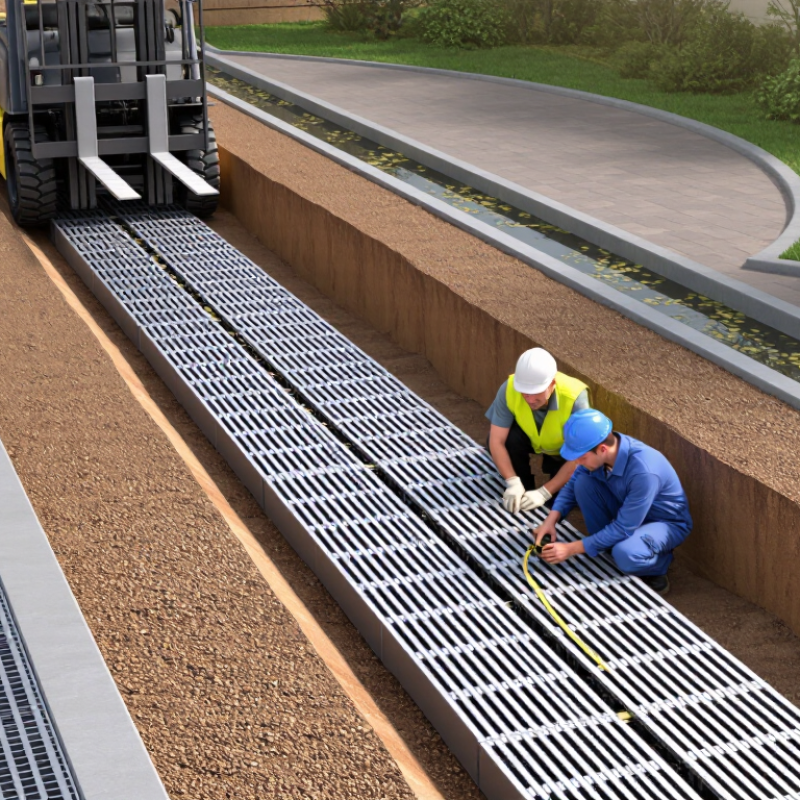
Before selecting a trench grating, define what the trench must do. Is it collecting roof runoff, draining a loading bay, or carrying water across a pedestrian route? Each setting changes the required flow capacity, opening size, and load rating. Note the trench length, outlet position, slope, and likely debris. Wet leaves and grit can reduce drainage quickly. A narrow grate may also create a trip or heel-catch risk where people walk.
Tip Observe the site during heavy rain, then inspect it again when dry. Record where water pools and whether vehicles, carts, or foot traffic cross the channel. The Federal Highway Administration’s Urban Drainage Design Manual, HEC-22, treats rainfall intensity, drainage area, and inlet capacity as key design inputs. These factors are more useful than choosing a grate by appearance alone. Conditions vary, though, and a quick site visit can miss seasonal debris or unusual storm flow.
The American Society of Civil Engineers’ 2021 Report Card assigned stormwater infrastructure a D grade, reflecting continuing system and maintenance challenges. For a specific trench, confirm local rainfall design criteria and expected wheel loads with a qualified drainage professional. Check whether the trench carries sediment, oils, or corrosive runoff, too. A detail easy to overlook: the grate must fit the channel frame securely. Recheck dimensions on site; drawings are not always perfect.
Match Grating Load Capacity to Traffic and Use
A trench grating should be selected for the traffic it will actually face, not just the traffic expected on a quiet day. A pedestrian path may need a different load rating from a driveway used by delivery vans. A loading area can see heavier vehicles, repeated braking, and concentrated wheel loads near the channel edge. Check the manufacturer’s stated load class and installation requirements, then compare them with the site’s vehicle types and frequency of use. A rating alone is not enough. The supporting frame, concrete surround, and installation quality also affect how the grating performs.
Look closely at where wheels will cross. A car turning over a narrow trench may place more stress on one section than occasional straight-line traffic suggests. For a busy service lane, consider the heaviest vehicle that could reasonably use it, including maintenance or emergency vehicles. Avoid guessing from appearance; a thick-looking grate is not proof of adequate capacity. If the site conditions are unclear, get a qualified drainage professional to review the expected loads and support details. That extra check can prevent rocking, cracked edges, or premature replacement.
There is a trade-off. Higher-capacity grating may cost more and can be heavier to handle, while choosing too light a rating risks damage and safety problems. I have seen projects focus carefully on vehicle weight but overlook turning movements and poor support beneath the frame. That is an easy mistake. Revisit the assumptions before ordering, especially if site use may change.
Compare Materials, Coatings, and Corrosion Resistance
Material choice should match the water, traffic, and maintenance conditions around the trench. Ductile iron handles heavy wheel loads, but chipped coatings can expose it to moisture and de-icing salts. Stainless steel resists many wet environments, though chloride-rich water can still cause pitting. Polymer concrete avoids metal corrosion, but impact strength and load rating need careful checking. No material is immune.
Coatings matter most where damage is likely. Hot-dip galvanizing provides a zinc barrier and sacrificial protection, while epoxy coatings can add a tougher surface if applied and repaired correctly. Inspect cut edges, welds, and contact points; these small areas often fail first. A 2016 NACE International IMPACT study estimated corrosion’s global cost at US$2.5 trillion, about 3.4% of global GDP. That figure covers many industries, not trench gratings alone, but it shows why lifecycle costs deserve attention. Ask suppliers for coating thickness, preparation methods, and test results relevant to the expected exposure. Then inspect the grate after installation. Real sites are messy, and even a good specification can miss one detail.
Check Drainage, Slip Resistance, and Safety Features
A trench grating should move water quickly without creating a hazard underfoot. Check the channel’s expected flow and local rainfall intensity, then compare them with the manufacturer’s tested capacity. Debris matters, too. Leaves and grit can block narrow openings, so inspect how easily the grate can be lifted and cleaned. For busy sites, a load rating should match actual vehicle traffic, not just occasional pedestrian use. A delivery van can impose very different forces from a person’s footsteps.
Slip resistance needs attention when surfaces are wet, oily, or covered with fine sediment. Look for a tested surface classification and opening dimensions that limit heel or cane entrapment. The U.S. Bureau of Labor Statistics recorded 351 fatal falls to lower levels in construction in 2020, as reported by CPWR’s The Construction Chart Book. That figure is not specific to grates, but it underlines why secure seating and flush installation matter. No raised edges.
Check that the grating cannot rock, shift, or lift under passing wheels. Match the frame and cover, and confirm that fasteners resist corrosion in the site environment. I would also inspect the installation after the first heavy rain; small settling can create a lip that was not there on day one. That check is easy to overlook. OSHA’s walking-working surfaces standard, 29 CFR 1910.22, calls for maintaining surfaces in a clean, orderly, and sanitary condition, with hazards corrected or guarded. Keep a simple inspection record, especially where wet-weather foot traffic is routine.
Confirm Dimensions, Standards, Installation, and Maintenance
10 Tips for Choosing the Best Trench Gratings?
Confirm Dimensions, Standards, Installation, and Maintenance
Measure the clear opening, channel depth, and grate length on site; drawings can miss small changes made during construction. Check the frame and grate together, since a mismatch can leave rocking edges or gaps that collect debris. For load selection, EN 1433 defines classes from A15 to F900, with test loads ranging from 15 to 900 kN. These figures describe standardized testing, not a guarantee that every installation will perform well. Match the class to the actual traffic and site conditions, including occasional service vehicles.
Installation matters. Follow the channel system’s instructions for bedding, alignment, concrete support, and joint treatment. FHWA’s Urban Drainage Design Manual, HEC-22, explains that inlet performance depends on factors such as flow, slope, and inlet geometry; a grate’s rating alone cannot predict drainage capacity. Keep the top level with the surrounding surface, and avoid leaving unsupported corners. Small errors become noisy ones.
Plan maintenance before purchase. Look for a grate that crews can lift safely and inspect without dismantling nearby pavement. Check openings for leaves, sediment, and litter after storms, then record recurring blockages. A maintenance log is useful, though it will not fix poor access. Recheck fasteners, seating, and visible corrosion during routine inspections. Consider local debris and cleaning equipment; the easiest design on paper may be awkward in a wet trench.
10 Tips for Choosing the Best Trench Gratings
Confirm dimensions, standards, installation, and maintenance.
Planning priority scores (1–5) are illustrative guidance, not measured survey results. Confirm project-specific requirements with applicable standards and qualified professionals.






