
Blogs

China Best Food Sealing Machine Suppliers for Global Buyers

Choosing a Food Sealing Machine supplier in China involves more than comparing prices. Global buyers need equipment that matches their products, packaging materials, output targets, and production space. A machine sealing small snack pouches may not suit liquid products or thicker films. Details matter. Ask suppliers for clear specifications, including sealing width, operating speed, supported materials, and power requirements. Product videos and sample tests can help buyers assess performance before making a decision.

This guide introduces factors to consider when evaluating Chinese suppliers, from manufacturing experience and customization options to quality checks and after-sales support. Look for specific evidence, such as documented inspection procedures, responsive technical communication, and spare-parts availability. Vague promises are not enough. Buyers should also confirm what is included in the quotation, such as installation guidance, training, and packaging. Requirements vary by destination and application, so verify applicable technical and import requirements with qualified professionals.

No supplier is perfect. A polished catalog cannot replace practical testing, and even a well-reviewed machine may need adjustments on a real production line. That is worth considering. By comparing suppliers carefully and asking precise questions, buyers can reduce uncertainty and identify equipment suited to their operations. The sections ahead offer a practical starting point for sourcing food sealing equipment from China with clearer expectations and fewer avoidable surprises.
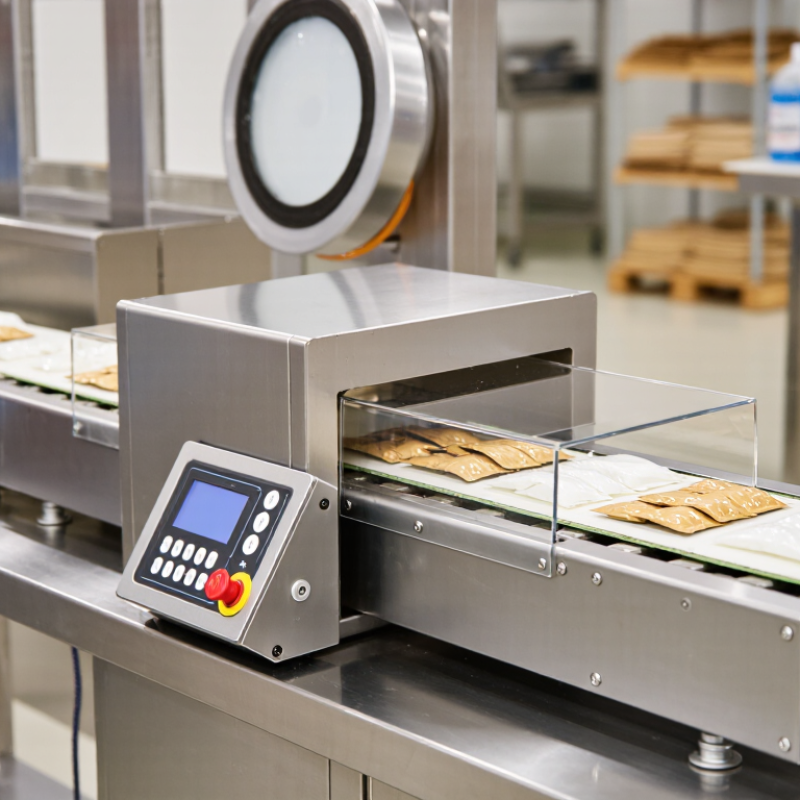
China Best Food Sealing Machine Suppliers for Global Buyers

Food Sealing Machine Types and Their Typical Throughput in Packs per Minute

Food Sealing Machine Types and Their Typical Throughput in Packs per Minute

Choosing a food sealing machine starts with the package, not the headline speed. A handheld or tabletop impulse sealer may handle about 5–15 packs per minute, depending on operator pace and bag width. Continuous band sealers often manage roughly 20–60 packs per minute for steady runs. The film must feed smoothly. Small details matter.

Vacuum chamber machines commonly process around 2–8 packs per minute per chamber cycle. Larger chambers can seal several bags at once, so count packs per cycle, not just cycles. Tray sealers may produce about 5–20 packs per minute, while automated rotary pouch systems can reach 20–60 or more. These are planning ranges, not guarantees. Product shape, seal width, changeovers, and inspection can reduce real output. I have seen a fast machine become the bottleneck when workers cannot load trays quickly enough.


Tips: Ask suppliers for a timed test using your actual product, package material, and target seal. Record good packs per minute after rejects and brief stops. A modest line may be the better fit; stated capacity can be easy to overestimate.

Key Supplier Specifications: Seal Width, Cycle Time, and Power Requirements

For global buyers, compare seal width, cycle time, and power under the same operating conditions. A 10 mm seal may suit a small pouch, while thicker or textured films can need a wider, more controlled sealing area. Ask suppliers for seal-strength results using ASTM F88 testing, and request samples made with your actual film and product. A wider seal is not automatically stronger.

Cycle time should include loading, sealing, cooling, and unloading—not just the heater’s dwell time. Ask for sustained cycles per minute with your package size, rather than a best-case figure. FAO’s 2019 State of Food and Agriculture estimates that 13.2% of food is lost between harvest and retail. Packaging cannot solve every cause, but repeatable seals can help reduce avoidable leaks. Power specifications matter, too: confirm voltage, phase, peak draw, and average consumption. A machine that fits the output target may still strain an older production line.

Tips: Test several film thicknesses over a full shift. Record seal failures, cycle rate, and energy use; supplier figures can look neat, but real runs are messier.

How ASTM F88 Measures Flexible-Package Seal Strength

ASTM F88 provides a consistent way to measure the force needed to separate a seal in flexible packaging. A technician cuts a narrow strip across the sealed area, then grips its ends in a tensile testing machine. The instrument pulls at a controlled speed and records the force as the seal opens. Small details matter. A crooked strip or uneven grip can distort the result.

The test offers different techniques for supporting the specimen, including unsupported, supported, and 90-degree methods. The chosen method should match the package structure and be reported with the results. Teams should also control specimen width, conditioning, and test speed. In practice, recording the failure mode helps explain the number: the seal may peel apart, stretch, or tear through the packaging material. A force value alone can miss that distinction.

F88 does not set one universal pass mark for every package. Buyers and manufacturers need acceptance criteria suited to the package, contents, and handling demands. Compare results only when test conditions are consistent. It sounds obvious, but production teams can overlook it when schedules are tight. A careful test report makes supplier comparisons more meaningful, while still leaving room to review real package performance.

Food-Contact Compliance: FDA 21 CFR and EU Regulation 1935/2004

For global buyers, food-contact compliance begins with parts that touch product, packaging, or splash zones. A sealing machine may include stainless-steel jaws, coated surfaces, silicone gaskets, and lubricated joints. Each material needs review against its intended use, temperature, contact time, and food type. Details matter.

In the United States, FDA 21 CFR contains requirements for specific substances and food-contact applications. It is not a single machine-wide approval. Ask suppliers for material declarations, relevant CFR references, and supporting test reports. Match these documents to your product and operating conditions. In the EU, Regulation (EC) No 1935/2004 requires materials not to transfer constituents in amounts that could endanger health or unacceptably alter food. Traceability is required, too. Good manufacturing practice under Regulation (EC) No 2023/2006 may also apply.

A useful supplier provides a clear parts list, compliance documents, and change-control records—not just the phrase “food grade.” Check seals and coatings carefully; repeated heat cycles can affect their performance. One point worth questioning: documents may cover a raw material but not the finished component. Ask for clarification before purchase. Compliance is specific.

China Best Food Sealing Machine Suppliers for Global Buyers

Food-Contact Compliance: FDA 21 CFR and EU Regulation 1935/2004

This chart maps selected compliance checkpoints in applicable food-contact rules: FDA 21 CFR provisions, and the EU framework under Regulation 1935/2004 together with applicable GMP and plastics measures. A value of 1 means the checkpoint is explicitly addressed in the cited rules; 0 means it is not a general requirement in that framework. This is a reference guide, not a certification or a substitute for checking the rules applicable to the specific material and intended use.

Supplier Evaluation by Output Capacity, Quality Tests, and After-Sales Support

China Best Food Sealing Machine Suppliers for Global Buyers

Compare suppliers by verified output, not the speed printed on a machine’s brochure. PMMI’s 2023 State of the Industry report put U.S. packaging machinery shipments at $10.3 billion in 2022, showing the scale of investment in this sector. That figure does not prove any supplier’s performance. Ask for a live run using your film, pouch size, and product. Record good packs per minute over a sustained shift, including changeovers and rejected seals. Watch the gap between rated and usable output.

Quality needs evidence. Request seal-strength results using an appropriate method, such as ASTM F88/F88M, and ask how the supplier checks leaks. For flexible packages, ASTM F2096 describes a bubble-emission test for detecting gross leaks; it may not suit every package or product. Inspect seal samples from start-up and after temperature changes. Small details matter. A clean-looking seal can still fail under handling, so agree on acceptance limits before testing.

After-sales support should be measurable. Confirm technician response hours, spare-part availability, remote troubleshooting, and operator training. Ask how quickly common wear parts can ship to your location, and request references from customers using similar machines. The weak point is often unclear ownership: buyers may assume commissioning includes production tuning, while suppliers may quote it separately. Put responsibilities, service scope, and performance targets in writing. A polished demo helps, but it is not a substitute for documented tests on your actual packaging.

Plug & Play Installation

Our installation services are top-notch, delivering modular systems for any application on time in plug & play condition. We leave nothing for you to figure out, set up, or fix. All you’ve to do is just step in, and get going with your business.

Dismantling & Reassembling

We hold a long-term view when we build modular rooms taking into consideration your changing needs. Whether it’s shifting your workspace to a new site, redesigning your unit to fit new requirements, or simply clearing the area at the end of the project, our Dismantling & Reassembling teams are pressed into service to get the job done in the quickest possible time and minimum resource wastage.

Interior Designing

Our interior designs combine both functional and aesthetic aspects to provide you with physical and emotional comfort. We ask you for your preferences and give the best possible solutions aligned to your tastes. Our units are built to be modern, stylish, and elegant.

Bespoke Solutions

We understand that every project is unique and therefore has a different set of requirements. That’s why we believe in customizing our solutions to fit individual needs. We are equipped with the right talents, technology, and skillset to offer bespoke modular units, without compromising on turnaround time or quality.

Aftersales Service

The benefits of choosing Containers ME continues long after the installation of the units as we provide aftersales service for as long as you need. All you have to do is sign the Annual Maintenance Contract (AMC) and enjoy technical support for all the maintenance-related issues. By signing the contract, you can rest assured that a highly professional team of dedicated staff are at your service all year round to attend to your needs.

Customized Container Solutions

We specialize in Customized Container Solutions designed to meet diverse needs across the UAE. Our offerings include customized modular containers that cater to various applications, from tailor-made container solutions to bespoke container designs.

Whether you’re looking for personalized container homes or custom modular containers, we have you covered. Our customized container offices provide functional workspaces, while our customized portable containers ensure flexibility on-site. Explore our range of custom container storage units and customized cargo containers to optimize your space.

We also offer custom container leasing and custom container fabrication services, along with customized sea containers designed for secure transport. For specialized needs, our specialized container modifications will help you create the perfect solution for your requirements in both Dubai and the broader UAE.

Get a quote

Get a quote



