Blogs

China Top Mobile Container Solutions for Global Buyers

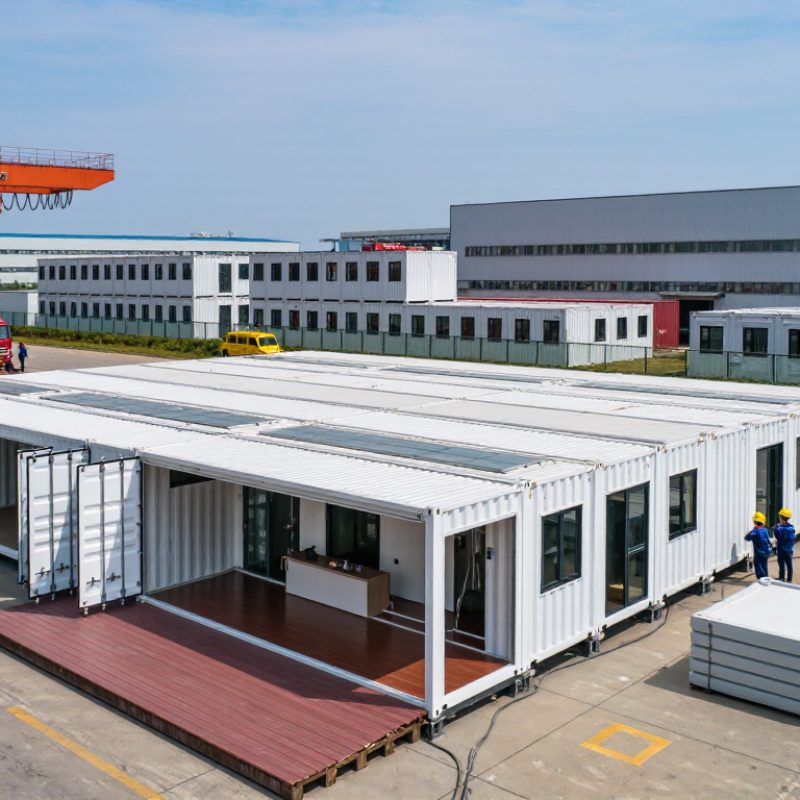
China has become a major source of practical, scalable mobile container solutions for global buyers. Manufacturers now supply modular offices, portable clinics, storage units, retail spaces, and site accommodation. These products can arrive flat-packed or fully assembled, depending on project needs. A well-designed unit may include insulated panels, steel framing, wiring, flooring, ventilation, and secure doors. Details matter.

Experienced buyers usually assess more than factory pricing. They review material specifications, welding quality, load requirements, fire performance, weather resistance, and maintenance access. Factory audits, production photographs, sample inspections, and independent testing can reduce avoidable risks. Reliable suppliers should explain tolerances, packaging methods, delivery schedules, warranty coverage, and after-sales support clearly. Silence on these points is not reassuring.

China’s manufacturing advantage often includes flexible customization and strong production capacity. However, lower cost does not automatically mean better value. Local building rules, electrical standards, climate conditions, transport limits, and installation skills may affect the final result. Fit varies. A coastal project may need stronger corrosion protection, while a cold-region site requires better insulation and heating design. Buyers should compare certified materials and documented processes, not attractive images alone.

This guide examines how global purchasers can evaluate China-based mobile container solutions with greater confidence. It considers design, manufacturing, quality control, shipping, customization, and supplier communication. Some recommendations may require adjustment after site testing. That is normal. Real projects reveal details that brochures often miss. A careful purchasing process supports safer decisions, clearer budgets, and more dependable long-term performance.

China Top Mobile Container Solutions for Global Buyers

What Are Mobile Container Solutions and Who Uses Them?

Mobile container solutions are relocatable, purpose-built spaces adapted from strong steel container structures. They can serve as offices, classrooms, clinics, storage rooms, kitchens, or secure retail units. Unlike ordinary storage boxes, usable models include insulation, ventilation, lighting, plumbing, and compliant electrical systems. Their value is practical: a prepared room can reach a worksite faster than conventional construction.

Still, “mobile” does not mean effortless. Transport access, lifting points, ground conditions, fire safety, and local approvals require careful checking. A unit placed on uneven gravel may settle, leak, or become difficult to open. Construction contractors use these units for site offices, changing rooms, and meeting spaces. Event teams may need ticket booths, first-aid rooms, or food-preparation areas. Schools, farms, municipalities, and remote project operators also use them when permanent buildings take longer.

Small details matter. Door swing, cable entry, drainage, and winter heating can affect daily operations more than exterior appearance. Buyers should request drawings, material specifications, load data, maintenance guidance, and delivery limits. A rushed specification may look efficient on paper, yet fail during a wet winter. That is an uncomfortable lesson. Reliable planning includes a site inspection, weather protection, installation training, and a clear relocation process. The right unit fits the user’s workflow, climate, access route, and operating budget.

Which Mobile Container Types Are Available from China?

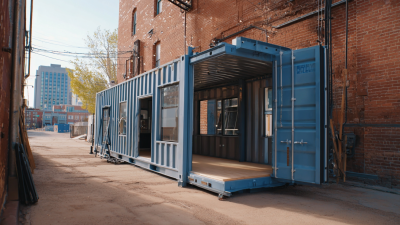
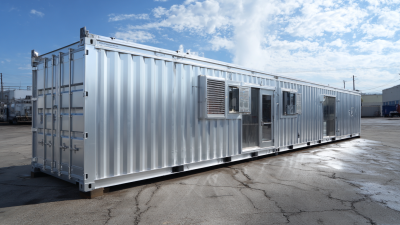
China offers several mobile container types for global buyers, each suited to a different operating condition. Standard dry containers are widely used for storage, temporary workshops, and site offices. Their steel frames provide practical protection against rain, dust, and daily handling. Modified office containers may include windows, insulation, lighting, wiring, and built-in desks. They arrive ready for faster installation.

Expandable and Specialized Units Expandable containers provide more interior space after unfolding their side panels. They work well for classrooms, reception rooms, small clinics, and temporary accommodation. Refrigerated containers support temperature-sensitive goods, using insulated walls, sealed doors, and cooling equipment. Sanitary containers can include toilets, showers, washbasins, drainage systems, and separate changing areas. They need careful plumbing checks.

There are also kitchen units, guard rooms, workshops, and container-based retail spaces. Some projects combine several types into one portable facility. I have found that layout drawings often hide practical problems. Door swing, cable routing, floor height, and forklift access matter. A low quotation may exclude insulation, electrical testing, spare parts, or export packaging. That can become expensive later.

Buyers should request material specifications, loading photos, inspection records, and clear installation instructions. Local building, fire, electrical, and transport requirements must also be checked before ordering. Expandable units are clever, but their hinges and seals deserve more attention than catalogue photos suggest.

How to Evaluate Features, Capacity, and Customization Options

China Top Mobile Container Solutions for Global Buyers: How to Evaluate Features, Capacity, and Customization Options

A mobile container should fit the job, not merely look spacious. Begin with external dimensions, internal clearance, payload, floor loading, and lifting points. ISO 668 defines standard container dimensions, helping buyers compare transport compatibility across markets. UNCTAD’s Review of Maritime Transport 2023 reported a 3.8% increase in the global container ship fleet. This growth makes standardized handling more valuable, but dimensions alone cannot guarantee smooth delivery.

Capacity calculations should include equipment, insulation, shelving, workers, and future expansion. A 20-foot unit may suit a compact site office, while a 40-foot unit offers more working space. However, higher volume can increase transport costs and foundation requirements. Check door width, ventilation, drainage, electrical protection, and fire-resistant materials. Small details matter. A poorly placed socket can disrupt an entire workflow.

Customization deserves technical discipline. Request drawings showing wall thickness, thermal performance, corrosion protection, roof loading, and maintenance access. The World Bank’s Logistics Performance Index 2023 evaluated 139 economies and identified timeliness as a key logistics outcome. Therefore, ask suppliers about lead times, inspection records, packing methods, and replacement parts. In practice, buyers often focus on appearance before serviceability. That is a mistake I have seen repeatedly. A visually impressive unit may still need better airflow, stronger flooring, or clearer installation instructions. Some requirements will change after site testing. Allow room for revision.

How to Select a Reliable Chinese Manufacturer and Supplier

China Top Mobile Container Solutions for Global Buyers

Choosing a reliable Chinese manufacturer requires more than comparing prices. Start by checking production experience, export records, and technical documentation. Ask for factory photos, quality certificates, and recent project references. A dependable supplier should explain steel grades, insulation materials, waterproofing methods, and transport dimensions clearly.

Request a sample or detailed prototype before placing a large order. Inspect door alignment, welds, flooring, ventilation, and electrical protection. Confirm the loading plan and container weight with your logistics provider. Test it twice. Small design defects can become expensive during installation. I have found that written specifications prevent more disputes than friendly promises. Still, documents may not reveal every factory weakness.

Tips:

Use a third-party inspection before shipment. Define acceptable tolerances, packaging standards, delivery dates, and warranty responses in the contract. Ask who will handle replacement parts and technical support after arrival. Communicate through precise drawings and approved revisions. Avoid suppliers who resist inspections or provide unusually vague answers. A lower quotation may reflect thinner materials, weaker testing, or missing services. That is not always true, but it deserves careful questioning.

What Import, Compliance, Delivery, and Installation Steps Apply?

China Top Mobile Container Solutions for Global Buyers

Importing a mobile container solution requires more than selecting dimensions and requesting a quotation. Confirm the HS code, commercial invoice, packing list, country of origin, and product specifications before shipment. Electrical systems may require local conformity documents and safety certificates. The World Bank’s 2023 Logistics Performance Index reported that international shipments averaged 44 days from export-port entry to destination-port departure. Planning only for sea transit is risky. Customs inspection, port storage, and document corrections can add days.

Delivery planning should include the final address, road width, turning space, lifting equipment, and foundation condition. A 40-foot unit may arrive safely but fail at the site entrance. Measure gates, overhead cables, and unloading clearance. Installation should follow approved structural and electrical drawings. Local professionals should verify grounding, anchoring, drainage, and fire-safety requirements. ISO 668 dimensions help standardize container sizes, but local building rules still control site approval. One practical mistake is assuming a standard unit fits every location. It does not.

Tips: Ask for a document pack before payment. Check every serial number. Confirm who pays port storage, customs duties, crane hire, and local installation. Keep photographs of the container before unloading. The process is clearer when responsibilities are written down, although no checklist catches every delay.

China Top Mobile Container Solutions for Global Buyers - What Import, Compliance, Delivery, and Installation Steps Apply?
Step Buyer Requirement or Decision Typical Data and Options Documents or Compliance Evidence Indicative Timing Key Checkpoint Before Moving Forward
1. Define the Application Confirm how the mobile container will be used and where it will be installed. Site office Accommodation Classroom Retail unit Sanitary unit
Typical design inputs include occupancy, floor area, climate, wind exposure, utility connections, fire-risk category, and expected service life.
Project brief, site photographs or drawings, intended-use statement, local planning requirements, and utility specifications. 1–5 business days for a clearly defined project. Use local building, fire, accessibility, electrical, and sanitation rules as design inputs rather than treating the unit as a standard freight container only.
2. Select the Container Format Choose the transportable module size and whether it will be used as a single unit or a connected system. Common external ISO container footprints are approximately:
• 20 ft: 6.06 m × 2.44 m
• 40 ft: 12.19 m × 2.44 m
• High-cube versions: approximately 2.90 m external height
Internal dimensions vary by construction, insulation, doors, and service equipment.
General arrangement drawing, dimensional drawing, connection details, lifting points, stacking limits, and transport weight statement. 2–7 business days for preliminary layout selection. Verify road, port, crane, and final-site access limits. A high-cube or heavily fitted module may exceed local transport-height or weight limits.
3. Confirm Technical Specifications Freeze the structure, envelope, interior finishes, openings, equipment, and utilities. Typical specification items include insulated wall and roof panels, floor loading, windows, doors, HVAC capacity, plumbing fixtures, lighting, sockets, distribution boards, kitchen or sanitary equipment, and corrosion protection. Approved shop drawings, material schedule, structural calculations where required, electrical single-line diagram, plumbing diagram, equipment datasheets, and finish schedule. 3–10 business days, depending on customization. Check that the selected materials and systems are suitable for the destination climate, including humidity, temperature range, salt exposure, snow, wind, and seismic conditions where applicable.
4. Establish the Import Classification Ask the customs broker to determine the correct classification for the complete shipment and any separately shipped equipment. Classification can differ according to whether the shipment is an empty container, a prefabricated building module, a steel structure, furniture, electrical equipment, HVAC equipment, or sanitary fittings. Commercial invoice, packing list, product description, material composition, declared value, country of origin, transport document, and any required import permits. Usually 3–10 business days before shipment if the documentation is complete. Do not rely on a generic container code without broker confirmation. The importer remains responsible for accurate declaration, duties, taxes, and restricted-goods checks.
5. Review Destination-Country Compliance Confirm whether the module requires approval as a building, electrical installation, transportable structure, workplace, accommodation unit, or combination of categories. Common review areas include structural safety, fire resistance, thermal performance, energy efficiency, ventilation, accessibility, plumbing, wastewater, electrical safety, and local occupancy rules. Certificates or test reports required by the destination authority, structural design documents, fire-performance evidence, electrical test records, and installation manuals. 2–8 weeks is common for authority review, but the period varies significantly by country and project type. Obtain written confirmation from the local authority, licensed engineer, architect, or compliance consultant before production of highly customized units.
6. Verify Electrical Compatibility Match the electrical system to the destination supply and local installation rules. Confirm nominal voltage, frequency, phase arrangement, plug and socket type, protective devices, earthing method, cable requirements, ingress protection, emergency lighting, and generator or solar integration if applicable. Electrical schematic, load schedule, insulation-resistance test, continuity test, protective-device test, equipment manuals, and local inspection records where required. 1–3 weeks for specification and document review. Do not energize the module until a qualified local electrician has checked the incoming supply, earthing, protection, and final connections.
7. Confirm Manufacturing and Quality Control Approve the final drawings and define inspection points before fabrication begins. Suitable checkpoints include frame inspection, welding inspection, dimensional inspection, insulation and sealing review, water-ingress check, equipment commissioning, finish inspection, and final packing review. Signed drawing approval, inspection and test plan, material certificates where applicable, factory inspection report, punch list, photographs, and final packing list. Typical production is 4–12 weeks after design approval, depending on quantity and customization. Record all deviations before dispatch. Confirm serial or unit references, component quantities, spare parts, keys, manuals, and loose items against the packing list.
8. Prepare Export and Shipping Documents Coordinate the shipment method, delivery term, insurance, and customs responsibilities. Possible transport arrangements include containerized sea freight, breakbulk shipment, flat-rack transport, or specialized road delivery. The correct option depends on module dimensions, weight, lifting points, and destination access. Commercial invoice, packing list, bill of lading or sea waybill, certificate of origin if required, insurance certificate, export declaration, fumigation or wood-packaging evidence where applicable, and lifting instructions. 1–3 weeks for booking and document preparation; ocean transit varies by route. Confirm whether freight is quoted for one complete module or for knocked-down components. Check port handling, demurrage, customs clearance, inland haulage, and unloading costs.
9. Prepare the Destination Site Make the foundation, access route, utilities, drainage, and lifting area ready before arrival. Site preparation may include a level concrete slab, strip foundations, screw piles, or other engineered supports. Requirements depend on soil, local frost depth, drainage, wind, seismic conditions, and structural loads. Site survey, foundation plan, soil information where required, utility connection plan, drainage plan, lifting plan, and local permit documents. 2–8 weeks, depending on civil works and permitting. Measure gate widths, turning radii, overhead clearances, road restrictions, crane reach, ground bearing capacity, and the distance from unloading point to final foundation.
10. Delivery and Unloading Arrange safe access, traffic control, lifting equipment, and qualified personnel. Common equipment includes a suitable mobile crane, truck-mounted crane, forklift for approved loads, lifting beams, spreader equipment, slings, and rated shackles. Equipment capacity must be based on actual module weight and lifting radius. Approved lifting plan, lifting-point details, weight statement, risk assessment, method statement, delivery booking, and local road or traffic permits where required. One day for unloading is common when access and equipment are ready. Never lift from unapproved points or by improvised methods. Keep personnel outside the suspended-load exclusion zone and follow local occupational-safety rules.
11. Installation and Connection Position, level, connect, seal, and commission the module or modular group. Installation may include anchoring, joining modules, installing stairs or ramps, connecting power, water, drainage, HVAC, fire systems, data, and external weather seals. Installation manual, anchor details, connection drawings, commissioning records, electrical and plumbing test results, fire-system records, and local sign-off documents. 1–10 days for a simple unit; larger multi-unit projects may require several weeks. Check level, anchor torque, water tightness, door and window operation, drainage slope, electrical protection, HVAC operation, emergency exits, and accessibility features.
12. Final Acceptance and Handover Complete the inspection, resolve defects, and obtain approval for use. Handover should cover structure, finishes, equipment, utilities, safety systems, spare parts, cleaning, operating instructions, maintenance intervals, and warranty responsibilities. Handover checklist, as-built drawings, operation and maintenance manuals, inspection certificates, warranty terms, training record, final invoice, and defect close-out report. 1–5 business days for inspection and close-out of a standard unit. Document the condition at handover and identify which items are covered by the supplier, installer, importer, building contractor, or local utility provider.
Important: Timelines, duties, permits, technical standards, and required certificates vary by destination country, application, shipment configuration, and site conditions. A licensed local professional and an experienced customs broker should verify the final requirements before purchase, production, and installation.

Plug & Play Installation

Our installation services are top-notch, delivering modular systems for any application on time in plug & play condition. We leave nothing for you to figure out, set up, or fix. All you’ve to do is just step in, and get going with your business.

Dismantling & Reassembling

We hold a long-term view when we build modular rooms taking into consideration your changing needs. Whether it’s shifting your workspace to a new site, redesigning your unit to fit new requirements, or simply clearing the area at the end of the project, our Dismantling & Reassembling teams are pressed into service to get the job done in the quickest possible time and minimum resource wastage.

Interior Designing

Our interior designs combine both functional and aesthetic aspects to provide you with physical and emotional comfort. We ask you for your preferences and give the best possible solutions aligned to your tastes. Our units are built to be modern, stylish, and elegant.

Bespoke Solutions

We understand that every project is unique and therefore has a different set of requirements. That’s why we believe in customizing our solutions to fit individual needs. We are equipped with the right talents, technology, and skillset to offer bespoke modular units, without compromising on turnaround time or quality.

Aftersales Service

The benefits of choosing Containers ME continues long after the installation of the units as we provide aftersales service for as long as you need. All you have to do is sign the Annual Maintenance Contract (AMC) and enjoy technical support for all the maintenance-related issues. By signing the contract, you can rest assured that a highly professional team of dedicated staff are at your service all year round to attend to your needs.

Customized Container Solutions

We specialize in Customized Container Solutions designed to meet diverse needs across the UAE. Our offerings include customized modular containers that cater to various applications, from tailor-made container solutions to bespoke container designs.

Whether you’re looking for personalized container homes or custom modular containers, we have you covered. Our customized container offices provide functional workspaces, while our customized portable containers ensure flexibility on-site. Explore our range of custom container storage units and customized cargo containers to optimize your space.

We also offer custom container leasing and custom container fabrication services, along with customized sea containers designed for secure transport. For specialized needs, our specialized container modifications will help you create the perfect solution for your requirements in both Dubai and the broader UAE.

Get a quote

Get a quote