China Top Woven Counter Stool Manufacturers and Suppliers
China’s woven furniture sector is gaining attention as buyers seek comfort, texture, and dependable production. Grand View Research estimates that the global wicker furniture market reached approximately USD 6.2 billion in 2022. Its forecast also indicates steady growth through 2030. This trend supports rising interest in the Woven Counter Stool for kitchens, cafés, hotels, and flexible workspaces.
The opportunity is attractive. It is not effortless. Buyers must compare weaving density, frame strength, seat height, moisture resistance, and finishing consistency. A close-up inspection can reveal uneven cane spacing or loose synthetic fibers. Reputable Chinese manufacturers usually provide material samples, load testing, production photographs, and packaging details before shipment. These steps create stronger evidence than attractive catalog images. CSIL’s World Furniture Outlook also shows continuing pressure on furniture companies to improve design value, supply-chain efficiency, and export reliability. Those demands matter when selecting long-term suppliers.
Charles Eames once said, “The details are not the details. They make the design.” His principle fits woven seating perfectly. A smooth edge, firm joint, and balanced weave influence both appearance and daily comfort. Yet a perfect stool does not exist. Natural rattan may vary slightly in color, while synthetic weaving can feel less authentic. This guide examines China’s leading Woven Counter Stool manufacturers and suppliers through practical criteria, including craftsmanship, customization, quality control, certifications, production capacity, and communication. The goal is not simply to find the lowest quotation. It is to identify a supplier capable of producing consistent stools that look convincing under real commercial use.
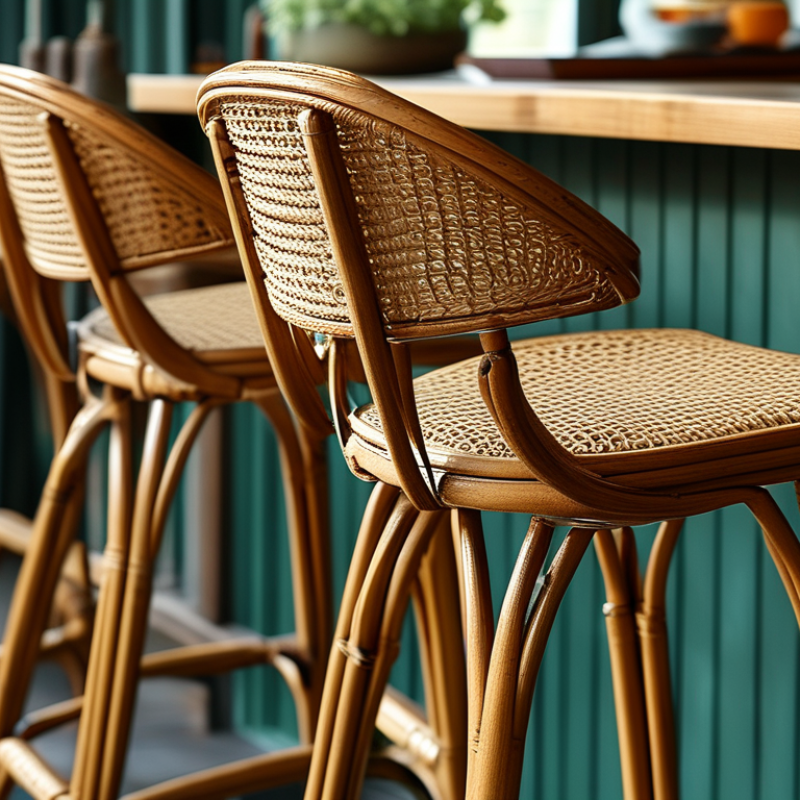
What Defines a Woven Counter Stool?
A woven counter stool is defined by more than a decorative seat. It combines a raised seating height with a hand- or machine-woven surface. Most counter stools use a 24–27 inch seat height for 34–36 inch counters. Bar stools are taller, usually 28–33 inches. That difference matters during daily use.
Common weaving materials include rattan, cane, paper cord, and coated synthetic fiber. Each material changes comfort, airflow, maintenance, and lifespan. A tight cane weave feels supportive but may become firm over long meals. Paper cord offers warmth, yet spills require faster cleaning. Synthetic fiber usually handles humidity better, though it can feel less natural.
The frame also defines quality. Kiln-dried wood or corrosion-resistant metal should resist movement under repeated loading. For commercial projects, buyers can reference BIFMA seating performance guidance and EN 16139 testing principles. These standards examine strength, stability, and durability, not visual beauty. According to Grand View Research, the global furniture market was valued at over 500 billion U.S. dollars in recent reporting, increasing pressure for reliable, scalable construction. A 2024 report from Mordor Intelligence also identifies material durability and sustainable production as important furniture-market themes. These figures do not prove that every woven stool is sustainable. That assumption needs checking.
Inspect the underside, weave tension, joint alignment, and floor glides. Loose strands are warning signs. A beautiful stool can still perform poorly. Experienced suppliers should provide material specifications, load testing, care instructions, and realistic tolerance notes. That evidence defines a woven counter stool better than appearance alone.
Key Materials and Construction Methods
Selecting China’s top woven counter stool manufacturers requires close attention to materials and construction. Grand View Research valued the global furniture market at approximately USD 516.6 billion in 2022 , with growth projected through 2030. This expansion increases demand for durable, traceable seating. Natural rattan offers flexibility and warm texture, while paper cord suits dry interiors. Polypropylene and HDPE perform better in humid hospitality spaces. Solid rubberwood or beech frames provide a stable base, but timber moisture should be checked before assembly.
Construction details decide service life. Reliable suppliers use mortise-and-tenon joints, reinforced dowels, or welded steel frames. The woven seat should maintain even tension around every corner. Loose strands are not harmless. They can become failure points after repeated loading. BIFMA X5.1 provides useful reference methods for testing stools, including strength and stability. A responsible factory should provide load-test records, material specifications, and inspection photos. The Global Forest Resources Assessment 2020 reports that forests cover about 31% of global land area , making responsible timber sourcing increasingly important. FSC-certified or legally documented wood is preferable, although paperwork alone does not prove perfect workmanship. A sample may look excellent and still hide weak joints. Inspect underneath. Check the footrest welds, frame squareness, weave tension, and surface finish before approving bulk production.
How to Evaluate Woven Counter Stool Manufacturers
China Top Woven Counter Stool Manufacturers and Suppliers: How to Evaluate Woven Counter Stool Manufacturers
A reliable evaluation starts with the frame, not the product photos. Request a physical sample and inspect every joint, weld, and woven connection. The seat should feel firm, without sharp edges or loose strands. Check the frame material, tubing thickness, coating method, and moisture resistance. For commercial projects, ask whether testing follows recognized seating standards, such as EN 12520 or BIFMA X5.1. These standards help assess strength and durability, but they do not replace real factory inspections.
The broader furniture market provides useful context. Grand View Research valued the global furniture market at about US$516.66 billion in 2022, with projected growth through 2030. This expansion increases supplier choices, but also creates uneven quality. A manufacturer may show excellent samples while using different materials in mass production. I would compare at least three production batches. One successful sample is not enough. Ask for material specifications, inspection records, weaving tolerances, carton tests, and monthly capacity. Review lead times carefully. A low quotation can become expensive after repairs, delays, or packaging damage.
Tips: Sit on the stool yourself. Measure seat height and footrest position. Ask for a pre-shipment inspection. Confirm replacement policies in writing. Visit the workshop if possible. Look beyond polished catalogs. A clean production floor, traceable materials, and consistent worker checks usually reveal more than marketing language.
How to Evaluate Woven Counter Stool Manufacturers
This procurement framework assigns a 100-point evaluation weight across the factors that most directly affect woven counter stool quality and supply reliability. Product construction and material durability receive the highest priority, followed by quality control, compliance, delivery capability, customization, and commercial terms.
Ordering, Quality Control, and Customization Options
China’s leading woven counter stool suppliers should be assessed beyond catalog photographs. Grand View Research projects the global furniture market to grow at about 5.2% annually from 2024 to 2030. That growth increases ordering pressure, especially for hospitality projects with repeated sizes and finishes. Request a technical quotation showing seat height, frame material, weave composition, carton dimensions, minimum order quantity, and production lead time. A pre-production sample matters. It reveals loose strands, uneven tension, sharp frame edges, and uncomfortable footrest placement. Small details matter.
Quality control should combine supplier experience with documented inspection. Use an agreed checklist based on ISO 2859-1 sampling principles, then inspect dimensions, welds, coating adhesion, load performance, color consistency, and packaging damage. The American Home Furnishings Alliance has emphasized furniture stability and durability as continuing buyer concerns, while BIFMA performance methods provide useful reference points for seating tests. These standards are not a substitute for project-specific requirements. They are a practical baseline. One weakness remains: woven materials can vary slightly between production batches. Approve a sealed reference sample and require production photos before shipment.
Customization can include paper-cord, rattan-look, synthetic fiber, or fabric weaving; natural, stained, or powder-coated frames; and adjusted seat heights for different counters. Ask whether changes affect tooling, testing, MOQ, or delivery dates. A supplier may promise flexibility too quickly. Confirm everything in signed drawings, including weave direction and color tolerance. Recheck the first container. Mistakes are expensive when every stool looks almost identical.






