Blogs

How to Choose the Right Stacker Forklift for Your Needs?

Choosing the right Stacker Forklift is crucial for efficiency in your operations. According to the Industrial Truck Association, the market for stacker forklifts is expected to grow significantly, reflecting an increased demand for efficient material handling solutions. Experts suggest that businesses must carefully assess their unique needs before making a purchase.

John Smith, a renowned expert in warehouse logistics, emphasizes, "Choosing the right stacker forklift can enhance productivity and reduce operational costs." Therefore, understanding the specifications and capabilities of various stackers helps align them with your specific requirements.

It is important to reflect on your business’s needs. Factors such as load capacity, height requirements, and space constraints play a vital role in selecting the ideal stacker forklift. Overlooking these aspects can lead to inefficiencies and increased operational challenges. Consider these insights as you navigate the options available in the market.
How to Choose the Right Stacker Forklift for Your Needs?

Understanding the Basics of Stacker Forklifts

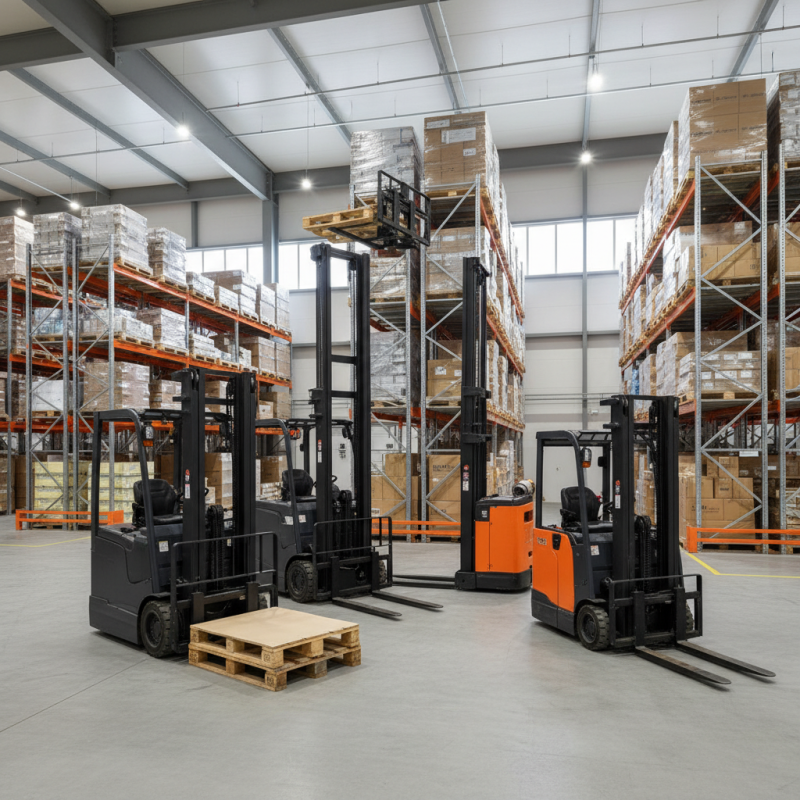
Stacker forklifts are essential in many industries. They are designed for lifting and moving pallets, especially in tight spaces. Understanding their basics is crucial to making an informed choice.

A stacker forklift typically features two forks and can elevate loads to considerable heights. Their design varies from manual to electric types, catering to different operational needs. For instance, manual stackers suit lighter workloads, while electric models handle heavier tasks with ease. Users should assess their average load weight before choosing.

Consider the turning radius when selecting a stacker forklift. A compact design allows for maneuverability in narrow aisles. Also, evaluate the lifting height. Some operations require stacking goods high, while others need just to elevate them slightly. The right balance of features ensures efficiency in your workspace. Remember, what works well for one setup might not suit another.
Identifying Your Specific Material Handling Needs

When selecting a stacker forklift, it’s crucial to identify your specific material handling needs. Consider the types of materials you’ll be lifting. Are they heavy, bulky, or fragile? Knowing the weight and dimensions of your loads will help you choose a forklift that can handle them effectively. A forklift's lift capacity and fork length play a significant role in ensuring safe operation.

Evaluate your workspace. Do you operate in tight aisles or open areas? A compact stacker might be necessary for narrower spaces. Understand the type of surfaces you’ll navigate; uneven ground or ramps may require a sturdier model. Additionally, think about how often you will be using the forklift. If it’s for daily use, investing in a more robust option might be wise.

Don’t overlook user comfort and safety. High-visibility areas and ergonomic controls can improve efficiency but remember that training operators in safe practices is crucial. Balancing these factors may require rethinking your initial choices. Reflect on what features are essential versus nice to have. This can avoid over- or under-investing in the right machine.

How to Choose the Right Stacker Forklift for Your Needs? - Identifying Your Specific Material Handling Needs

Dimension Value
Lift Height Up to 5 meters
Load Capacity 1,000 - 3,000 kg
Fuel Type Electric / Diesel / LPG
Mast Type Simplex / Duplex / Triplex
Usage Type Indoor / Outdoor
Tire Type Pneumatic / Solid
Control Type Manual / Semi-Electric / Fully Electric
Application Warehouse / Retail / Construction

Evaluating Key Features of Stacker Forklifts

When selecting the right stacker forklift, it’s crucial to evaluate key features that match your usage needs. Begin by assessing the lift capacity. Many stacker forklifts can lift between 1,000 to 3,000 pounds. Knowing your maximum weight requirement helps avoid equipment failures. Evaluate the lift height as well. Some forklifts reach up to 16 feet, while others offer lower heights. Choose based on your workspace dimensions.

Consider the power source too. Electric models are quieter and ideal for indoor use. On the other hand, propane models can handle tougher outdoor tasks. Think about your working environment. A tool suited for indoor may not perform well outdoors due to tire types and weather resistance.

**Tips:** Always check if the stacker forklift fits into your narrow aisles. Measure the maneuverability space carefully. A less nimble forklift can lead to accidents. Test driving before purchase is essential. It reveals its ease of use and responsiveness.

Don't forget maintenance needs. Some models require regular servicing, which can add to costs. Regularly inspect battery health if using electric options. An informed choice ensures long-term satisfaction and efficiency in your operations.

Stacker Forklift Features Comparison

Comparing Different Types of Stacker Forklifts

When choosing a stacker forklift, understanding the different types available is crucial. There are manual, semi-electric, and fully electric stackers. Each type has unique features that cater to various operational needs. For instance, manual stackers are cost-effective and suitable for low-frequency loading. They require more physical effort but offer simplicity. On the other hand, electric stackers enhance productivity and reduce strain on operators, making them ideal for high-volume tasks.

Tips: Assess the typical load weight and height in your workspace. This assessment helps in selecting a model that suits your environment. It’s also important to consider the maneuverability of the forklift. A narrow aisle stacker could be a wise choice for crowded warehouses.

Consider your operators' training needs. Some electric models come with advanced controls. New users might need more time to adjust. Regular maintenance is key too. This ensures safety and longevity for your equipment. Failure to perform routine checks can lead to unexpected breakdowns, affecting operations. Reliability is non-negotiable in warehouse settings.

Assessing Budget and Operational Considerations

When choosing a stacker forklift, budget and operational considerations are crucial. Establish a clear budget to avoid overspending. The initial cost is just the beginning. Consider maintenance, fuel, and repair costs over time. A cheap option may lead to higher long-term expenses. Analyze your warehouse layout as well. A model that fits your space can maximize efficiency.

Operational efficiency relies on selecting the right forklift. Evaluate the type of goods you'll handle. Will you be lifting heavy pallets or lighter items? Understanding your needs helps in selecting the appropriate model. Is your team experienced with powerful forklifts, or are they novice operators? Training is often overlooked in the budget, but it’s vital for safety and productivity.

Factor in the frequency of use. If you need a forklift daily, durability matters. Consider how easy it is to maneuver in tight spaces. A wrong choice may hinder workflow, causing frustration. Reflect on how each aspect fits your overall operation. Make informed decisions to enhance your warehouse efficiency.

Plug & Play Installation

Our installation services are top-notch, delivering modular systems for any application on time in plug & play condition. We leave nothing for you to figure out, set up, or fix. All you’ve to do is just step in, and get going with your business.

Dismantling & Reassembling

We hold a long-term view when we build modular rooms taking into consideration your changing needs. Whether it’s shifting your workspace to a new site, redesigning your unit to fit new requirements, or simply clearing the area at the end of the project, our Dismantling & Reassembling teams are pressed into service to get the job done in the quickest possible time and minimum resource wastage.

Interior Designing

Our interior designs combine both functional and aesthetic aspects to provide you with physical and emotional comfort. We ask you for your preferences and give the best possible solutions aligned to your tastes. Our units are built to be modern, stylish, and elegant.

Bespoke Solutions

We understand that every project is unique and therefore has a different set of requirements. That’s why we believe in customizing our solutions to fit individual needs. We are equipped with the right talents, technology, and skillset to offer bespoke modular units, without compromising on turnaround time or quality.

Aftersales Service

The benefits of choosing Containers ME continues long after the installation of the units as we provide aftersales service for as long as you need. All you have to do is sign the Annual Maintenance Contract (AMC) and enjoy technical support for all the maintenance-related issues. By signing the contract, you can rest assured that a highly professional team of dedicated staff are at your service all year round to attend to your needs.

Customized Container Solutions

We specialize in Customized Container Solutions designed to meet diverse needs across the UAE. Our offerings include customized modular containers that cater to various applications, from tailor-made container solutions to bespoke container designs.

Whether you’re looking for personalized container homes or custom modular containers, we have you covered. Our customized container offices provide functional workspaces, while our customized portable containers ensure flexibility on-site. Explore our range of custom container storage units and customized cargo containers to optimize your space.

We also offer custom container leasing and custom container fabrication services, along with customized sea containers designed for secure transport. For specialized needs, our specialized container modifications will help you create the perfect solution for your requirements in both Dubai and the broader UAE.

Get a quote

Get a quote