
Blogs

How to Choose a Home Charging Station?

Choosing a Home Charging Station starts with understanding how you actually use your vehicle. A charger’s maximum power is only one part of the decision. Your car’s onboard charging limit and your home’s electrical capacity also affect charging speed. Check the vehicle manual and the station’s specifications before comparing models. Small details matter. Think about how many miles you drive daily, where the vehicle parks, and whether the cable can reach comfortably without crossing a walkway. A charger near the garage door may be convenient, but exposure to rain, sunlight, or freezing temperatures can influence which enclosure and cable are suitable.

Installation deserves equal attention. A qualified electrician can assess the existing panel, wiring, and proposed mounting location before you buy. This may prevent surprises, though an assessment cannot guarantee that every installation will be simple. Consider cable length, weather protection, warranty coverage, and customer support alongside charging output. Wi-Fi scheduling and energy monitoring can be useful, but only if you expect to use them. Some features look impressive on a product page and then go untouched. Compare the total cost, including installation, rather than judging by the station price alone. The right Home Charging Station should fit your vehicle, electrical setup, parking routine, and budget—not merely offer the highest advertised power. A little careful checking now can make everyday charging safer and more predictable.
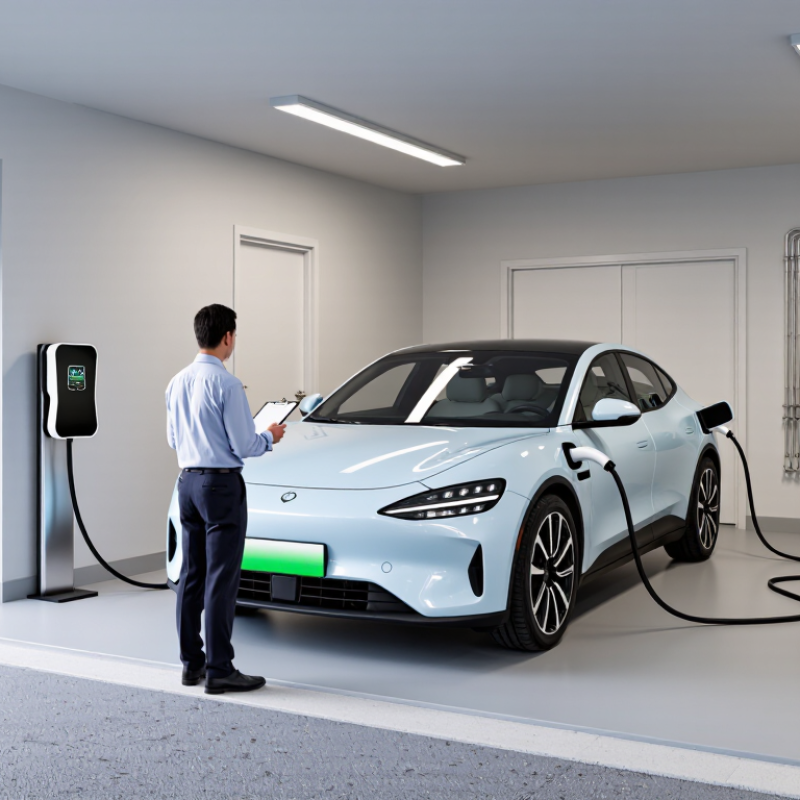
How to Choose a Home Charging Station?

Estimate Charging Needs: DOE Reports 10–60 Miles per Hour for Level 2

DOE’s Alternative Fuels Data Center reports that Level 2 charging can add roughly 10–60 miles of driving range per hour. That wide spread matters. Actual charging speed depends on the vehicle’s onboard charger, the station’s power, and battery conditions. A higher-rated home station cannot make a vehicle accept power faster than its own charging system allows.

Estimate your routine, not your rarest long drive. If your commute uses 30 miles of range, a station adding 10 miles per hour may need about three hours to replace it; one adding 30 miles per hour may need about an hour. These are rough estimates, not promises. Cold weather, battery temperature, and charging losses can change the result. The U.S. Department of Energy’s AFDC guidance also notes that charging time varies with vehicle and equipment specifications, so check the vehicle manual before choosing a station.

Use the EPA-rated range for your vehicle as a reference, then compare it with the miles you typically drive and the hours your car sits at home. A 2022 National Household Travel Survey from the Federal Highway Administration can help provide context for daily travel patterns, but your own mileage is more useful. Keep a simple log for a week. It may be imperfect, but it beats buying extra charging power you rarely need.


How to Choose a Home Charging Station?

DOE reports that Level 2 charging can add about 10–60 miles of driving range per hour.

Use this range as a general guide when comparing home charging options. Actual miles added per hour vary with the vehicle, charging equipment, and conditions.

Match Charger Output to Vehicle Limits: Level 2 Uses 208–240 V (DOE)

The U.S. Department of Energy describes Level 2 charging as using 208–240 volts AC. A home may supply 240 volts, while some shared electrical systems provide 208 volts. That difference affects charging power, even when the charger’s current rating stays the same. For example, a 32-amp charger delivers about 7.7 kilowatts at 240 volts, but roughly 6.7 kilowatts at 208 volts. Actual charging can be lower because of conversion losses.

Check your vehicle’s maximum AC charging rate before choosing equipment. The vehicle’s onboard charger sets a limit; a higher-rated home station cannot make the car exceed it. If the car accepts up to 7.2 kilowatts on AC, an 11-kilowatt station may offer little extra speed. The label matters. Also confirm the station’s adjustable amperage and your home circuit’s capacity with a qualified electrician. A 240-volt connection is not automatically suitable for every panel or outlet. Not always. Estimates depend on voltage, current, and installation conditions, so compare specifications rather than relying on a single advertised charging-speed figure.

Check Panel Capacity: NEC Applies a 125% Factor to Continuous Loads

Before choosing a home charging station, check the electrical panel’s available capacity, not just its main breaker rating. The National Electrical Code treats EV charging as a continuous load: equipment and circuit sizing generally must account for 125% of the charging current. In practical terms, a 40-amp charging load needs a circuit rated for at least 50 amps. That does not mean every 50-amp circuit is available for charging.

A panel also serves existing loads, such as an oven, dryer, and air conditioner. An electrician can evaluate these using the applicable load-calculation method and check the panel, wiring, and breaker together. A larger charging station may not deliver faster charging if the home cannot safely support its load.

Small detail, big impact.

The U.S. Energy Information Administration’s 2020 Residential Energy Consumption Survey reports average household electricity use of 10,791 kilowatt-hours per year. That annual figure provides context, but it cannot show whether several high-power appliances run at the same time. Peak demand matters more for this decision.

Local code editions and installation conditions can differ, so confirm the calculation with a qualified electrician. I would not guess from a panel label alone.

Verify Connector Compatibility: SAE J3400 Standardizes the NACS Interface

Before choosing a home charging station, check the connector your vehicle accepts. SAE J3400 standardizes the NACS-style charging interface, giving manufacturers a shared specification for compatible plugs and inlets. That makes connector comparisons clearer, but it does not mean every J3400 station will suit every vehicle. Read the vehicle manual and the station’s technical sheet. Look for the exact connector type, supported charging method, and power rating. It is easy to miss a small mismatch.

A plug that fits is only part of the check. Confirm that the station supports your vehicle’s AC charging limits and that its cable can reach the parked charge port without stretching across a walkway. If an adapter is needed, verify that it is approved for the specific vehicle and charging equipment. Then have a qualified electrician check the home circuit, breaker capacity, and installation location. These details are less exciting than connector standards, perhaps, but they affect everyday use. I would not rely on a product photo alone; connector shapes can look similar, while the specifications tell the fuller story.

Compare Installation and Safety: Look for UL or ETL Certification

When comparing home charging stations, check the certification on the exact model—not just a product listing or sales page. UL 2594 covers electric-vehicle supply equipment, while UL 2231 addresses personnel protection systems. An ETL mark also indicates evaluation against applicable safety standards by an OSHA-recognized testing laboratory. Verify the model in the certifier’s online directory. Small detail. It can prevent a costly mistake.

Certification does not confirm that a unit suits your home’s wiring. Ask a qualified electrician to assess panel capacity, circuit requirements, cable routing, and the proposed mounting location. Compare installation quotes for the same work, including permits where required and any panel upgrades. A neat garage wall can hide an overloaded circuit. The label alone cannot reveal that.

NREL’s 2023 report, The 2030 National Charging Network, estimates that roughly 28 million charging ports may be needed in the United States by 2030, including many private residential ports. That scale makes clear, consistent installation checks important. Still, a national projection cannot tell you whether a specific charger fits your home. Read the installation manual, match its requirements to the electrician’s plan, and confirm the certification applies to the complete charging unit. I would also inspect the cord’s reach before installation; it is easy to overlook.

Plug & Play Installation

Our installation services are top-notch, delivering modular systems for any application on time in plug & play condition. We leave nothing for you to figure out, set up, or fix. All you’ve to do is just step in, and get going with your business.

Dismantling & Reassembling

We hold a long-term view when we build modular rooms taking into consideration your changing needs. Whether it’s shifting your workspace to a new site, redesigning your unit to fit new requirements, or simply clearing the area at the end of the project, our Dismantling & Reassembling teams are pressed into service to get the job done in the quickest possible time and minimum resource wastage.

Interior Designing

Our interior designs combine both functional and aesthetic aspects to provide you with physical and emotional comfort. We ask you for your preferences and give the best possible solutions aligned to your tastes. Our units are built to be modern, stylish, and elegant.

Bespoke Solutions

We understand that every project is unique and therefore has a different set of requirements. That’s why we believe in customizing our solutions to fit individual needs. We are equipped with the right talents, technology, and skillset to offer bespoke modular units, without compromising on turnaround time or quality.

Aftersales Service

The benefits of choosing Containers ME continues long after the installation of the units as we provide aftersales service for as long as you need. All you have to do is sign the Annual Maintenance Contract (AMC) and enjoy technical support for all the maintenance-related issues. By signing the contract, you can rest assured that a highly professional team of dedicated staff are at your service all year round to attend to your needs.

Customized Container Solutions

We specialize in Customized Container Solutions designed to meet diverse needs across the UAE. Our offerings include customized modular containers that cater to various applications, from tailor-made container solutions to bespoke container designs.

Whether you’re looking for personalized container homes or custom modular containers, we have you covered. Our customized container offices provide functional workspaces, while our customized portable containers ensure flexibility on-site. Explore our range of custom container storage units and customized cargo containers to optimize your space.

We also offer custom container leasing and custom container fabrication services, along with customized sea containers designed for secure transport. For specialized needs, our specialized container modifications will help you create the perfect solution for your requirements in both Dubai and the broader UAE.

Get a quote

Get a quote



