
Blogs

Top Water Cooler Evaporator Manufacturers Worldwide?

Choosing among the top Water Cooler Evaporator manufacturers worldwide requires more than comparing prices or cooling capacity. A reliable evaluation examines heat-transfer performance, material quality, production consistency, and after-sales support. The best suppliers understand how an evaporator behaves inside a busy dispenser, where warm inlet water, restricted airflow, and repeated cleaning cycles can affect performance.

Wilbert F. Stoecker, a respected refrigeration engineer and educator, described the evaporator as “the component in which useful refrigeration is produced.” This simple observation remains important. A well-designed evaporator draws heat from water efficiently, maintains stable outlet temperatures, and supports dependable operation during frequent dispensing. Copper tubing, stainless-steel surfaces, insulation quality, and refrigerant compatibility all deserve close attention.

Small details matter.

Manufacturers serving global markets must also demonstrate testing discipline. Look for documented pressure testing, corrosion evaluation, thermal-performance data, and consistent dimensional control. Certifications can support trust, but they do not replace practical evidence. Factory audits, sample testing, and field feedback often reveal weaknesses that brochures hide.

This comparison will examine leading Water Cooler Evaporator manufacturers through technical capability, customization, delivery reliability, and service experience. It will also consider less obvious issues, including replacement access, cleaning requirements, and long-term energy use. No supplier is perfect. Some may offer advanced designs but limited regional support. Others may provide strong service while using less efficient components. Readers should question every claim, verify current specifications, and match each manufacturer’s strengths with the real demands of their water-cooling application.
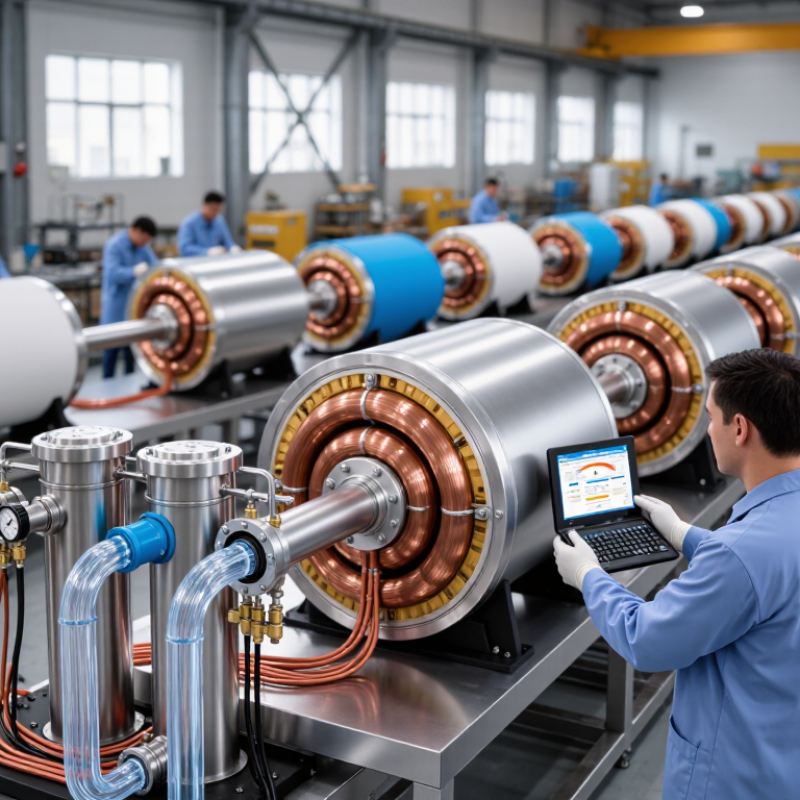
Top Water Cooler Evaporator Manufacturers Worldwide?

Defining Water Cooler Evaporators: 0–12°C Water and Phase-Change Cooling

A water cooler evaporator is the heat-transfer core that cools drinking water from ambient temperature to about 0–12°C. Inside it, refrigerant absorbs heat while changing from liquid to vapor. The water stays in its own circuit, often flowing through a stainless-steel tube, plate channel, or tank coil. This phase-change process provides steady cooling with less water waste than direct evaporative methods.

When comparing worldwide manufacturers, examine the evaporator before judging the complete cooler. Look for stable outlet temperatures, low pressure drop, cleanable water passages, and strong resistance to corrosion. A well-designed unit may use copper or stainless steel, depending on water quality and hygiene requirements. Weld quality matters. So does insulation around the cold surface, because condensation can damage nearby components.

Practical testing should include flow rate, inlet temperature, refrigerant pressure, and pull-down time. Ask for performance data at several operating conditions, not one attractive laboratory number. Manufacturers with reliable engineering usually explain material grades, brazing methods, leak testing, and quality controls clearly. However, no specification fits every site. Hard water, warm room temperatures, restricted airflow, or poor maintenance can reduce performance. That limitation deserves attention. A perfectly efficient evaporator may still disappoint when the system around it is undersized.


Ranking Global Manufacturers by COP, Cooling Capacity, ΔT, and ISO 9001

Global evaporator rankings should begin with comparable test conditions. AHRI Standard 550/590 defines rating procedures for water-cooled and air-cooled chillers. COP must be calculated from net cooling output and total power input. Cooling capacity should be reported in kW, not vague “high output” claims. ΔT also matters. A common chilled-water design uses about 5–7 K, although actual operation depends on flow and load. Manufacturers with verified data at identical temperatures deserve higher positions.

The ranking can combine four measures: seasonal COP, rated cooling capacity, stable ΔT, and ISO 9001 certification. COP reveals energy efficiency. Capacity shows application range. ΔT indicates heat-transfer performance and control stability. ISO’s 2023 Survey reported more than 1.2 million ISO 9001 certificates worldwide, but certification alone does not prove superior evaporator design. It confirms a quality-management system. That distinction is often missed. The IEA’s cooling analysis also warns that cooling demand may rise sharply by 2050, increasing pressure for efficient equipment. Laboratory values can still disappoint in dusty plants or poorly balanced water circuits.

Tips: Request full test sheets, refrigerant details, flow rates, entering and leaving temperatures, and power measurements. Check whether COP includes pumps and fans. Compare warranty data and field references, not brochures alone. A small ΔT error can distort capacity calculations. I would also repeat the comparison under partial load, because peak-load rankings may not reflect daily performance.

Top Water Cooler Evaporator Manufacturers Worldwide — Anonymous Benchmark

Comparative benchmark based on publicly reported specification ranges for industrial water-cooling evaporators. Manufacturer identities are intentionally omitted. COP and cooling capacity are performance indicators; ΔT is shown as the rated chilled-water temperature difference, while ISO 9001 indicates reported certification status.

Values are representative published-specification benchmarks and should be verified against current manufacturer datasheets, project conditions, refrigerant selection, and certification records.

Top Supplier Regions: China, Europe, North America, Japan, and South Korea

Top Water Cooler Evaporator Manufacturers Worldwide?

China remains a major supplier region for water cooler evaporators, supported by broad metalworking capacity and high-volume component production. European manufacturers often emphasize refrigerant compliance, energy testing, and corrosion-resistant materials. Eurovent Market Intelligence reports that Europe’s HVACR equipment market reached several billion euros annually, showing strong demand for verified thermal components. However, regional averages can hide large differences between factories.

North American suppliers commonly focus on serviceability, replacement compatibility, and robust cabinet integration. Japan is recognized for compact heat exchangers, precise brazing, and strict production controls. South Korea combines automated manufacturing with strong electronics and refrigeration engineering. The International Energy Agency reported that space-cooling electricity demand could triple by 2050 without efficiency improvements. That makes evaporator design more important than low purchase price alone.

Check the details.

A reliable evaluation should include cooling capacity, airflow resistance, tube-wall thickness, leak-test pressure, and performance under humid conditions. The U.S. Department of Energy notes that evaporative cooling systems can use substantially less electricity than conventional air conditioning, although savings depend on climate and humidity. This limitation matters. A supplier may publish excellent laboratory data, yet field performance can decline when dust, scale, or poor airflow enters the system. Buyers should request third-party test records, production traceability, and sample validation before comparing suppliers across China, Europe, North America, Japan, and South Korea.

Refrigerant Comparison: R290 GWP 3 vs R134a GWP 1,430 and R32 GWP 675

Top Water Cooler Evaporator Manufacturers Worldwide?

Refrigerant choice now shapes evaporator design, operating cost, and environmental performance. R290 has a global warming potential of about 3, far below R134a at 1,430 and R32 at 675. That difference is substantial. However, low GWP does not automatically mean simpler engineering. R290 is flammable, so manufacturers must design sealed circuits, controlled charging, suitable ventilation, and reliable leak protection. R32 is mildly flammable and often requires similar safety attention. R134a remains familiar and nonflammable, but its high GWP creates long-term environmental concerns.

Experienced evaporator manufacturers should show practical testing data, not only attractive efficiency claims. Look for evidence covering thermal performance, pressure stability, corrosion resistance, oil compatibility, and noise control. A compact water cooler may face frequent starts, mineral deposits, and uneven water flow. These details expose weak designs quickly. Material selection matters too, especially around brazed joints and high-cycle tubing. No option is perfect. My view is slightly cautious: R290 often offers the strongest climate profile, but only when the whole system is engineered correctly.

Tips: Ask suppliers for refrigerant-specific drawings, safety records, charge limits, and test conditions. Compare cooling capacity at the same ambient temperature. Check service training before approving a new refrigerant. Cheap conversions can create expensive problems.

Compliance Checklist: EN 378, ASHRAE 15, and ISO 5149 Safety Standards

Top Water Cooler Evaporator Manufacturers Worldwide?

For water cooler evaporators, compliance begins before fabrication. EN 378 addresses refrigeration-system safety, installation, operation, and maintenance. ASHRAE 15 adds requirements for refrigerant concentration, machinery rooms, ventilation, and pressure protection. ISO 5149 provides a global framework for similar risk controls. These standards are related, but they are not identical.

Ask each manufacturer for a clause-by-clause compliance matrix. Check refrigerant type, charge calculation, design pressure, relief-device settings, leak detection, and emergency shutdown access. Request material certificates, pressure-test records, and documented factory inspections. The unit should also show clear labels, service ports, and safe access around electrical components. Small details matter.

The International Energy Agency reported in The Future of Cooling that global space-cooling energy demand could more than triple by 2050 without stronger efficiency measures. UNEP’s Global Cooling Watch 2023 also identified rapidly rising cooling demand and emissions risks. Efficient evaporator design therefore supports both safety and long-term energy performance. However, efficiency claims need measured data, not attractive brochures.

A practical audit should include startup procedures, maintenance intervals, and technician training. Ask whether the supplier has tested the complete operating envelope, including high ambient temperatures and abnormal pressure conditions. A checklist can still miss field realities. That is the uncomfortable part. Final approval should involve a qualified local engineer and the authority having jurisdiction.

Plug & Play Installation

Our installation services are top-notch, delivering modular systems for any application on time in plug & play condition. We leave nothing for you to figure out, set up, or fix. All you’ve to do is just step in, and get going with your business.

Dismantling & Reassembling

We hold a long-term view when we build modular rooms taking into consideration your changing needs. Whether it’s shifting your workspace to a new site, redesigning your unit to fit new requirements, or simply clearing the area at the end of the project, our Dismantling & Reassembling teams are pressed into service to get the job done in the quickest possible time and minimum resource wastage.

Interior Designing

Our interior designs combine both functional and aesthetic aspects to provide you with physical and emotional comfort. We ask you for your preferences and give the best possible solutions aligned to your tastes. Our units are built to be modern, stylish, and elegant.

Bespoke Solutions

We understand that every project is unique and therefore has a different set of requirements. That’s why we believe in customizing our solutions to fit individual needs. We are equipped with the right talents, technology, and skillset to offer bespoke modular units, without compromising on turnaround time or quality.

Aftersales Service

The benefits of choosing Containers ME continues long after the installation of the units as we provide aftersales service for as long as you need. All you have to do is sign the Annual Maintenance Contract (AMC) and enjoy technical support for all the maintenance-related issues. By signing the contract, you can rest assured that a highly professional team of dedicated staff are at your service all year round to attend to your needs.

Customized Container Solutions

We specialize in Customized Container Solutions designed to meet diverse needs across the UAE. Our offerings include customized modular containers that cater to various applications, from tailor-made container solutions to bespoke container designs.

Whether you’re looking for personalized container homes or custom modular containers, we have you covered. Our customized container offices provide functional workspaces, while our customized portable containers ensure flexibility on-site. Explore our range of custom container storage units and customized cargo containers to optimize your space.

We also offer custom container leasing and custom container fabrication services, along with customized sea containers designed for secure transport. For specialized needs, our specialized container modifications will help you create the perfect solution for your requirements in both Dubai and the broader UAE.

Get a quote

Get a quote



