China’s container fabrication industry has grown beyond basic steel-box production. Leading manufacturers now build dry containers, refrigerated units, open-top models, tank containers, and customized offshore equipment. Their products support ports, factories, logistics companies, and specialized transport operations worldwide.
This guide examines ten notable Chinese companies through practical criteria. These include welding consistency, steel selection, corrosion protection, dimensional accuracy, factory capacity, inspection procedures, and after-sales support. Certifications matter, but certificates alone do not prove dependable workmanship. Buyers should also review production photographs, testing records, sample approvals, and customer references.
John Fossey, a respected container-shipping analyst at Drewry, has said, “A container is valuable only when it performs reliably throughout its service life.” That principle shapes this comparison. A strong container fabrication company should deliver doors that seal evenly, floors that resist repeated loading, and corner castings that tolerate heavy handling. Small defects can become expensive problems after months at sea.
The ranking is not absolute. A manufacturer excellent at refrigerated containers may not lead in tank units. Some companies publish limited technical information, which makes direct comparison difficult. That weakness deserves attention.
The following selection focuses on manufacturers with visible industrial experience, export capability, engineering resources, and consistent quality practices. It also considers customization, communication speed, lead times, and the ability to support inspection requirements. Readers should confirm current certifications and specifications before placing an order, because factory capabilities can change. Real performance depends on the project, not just the company name.
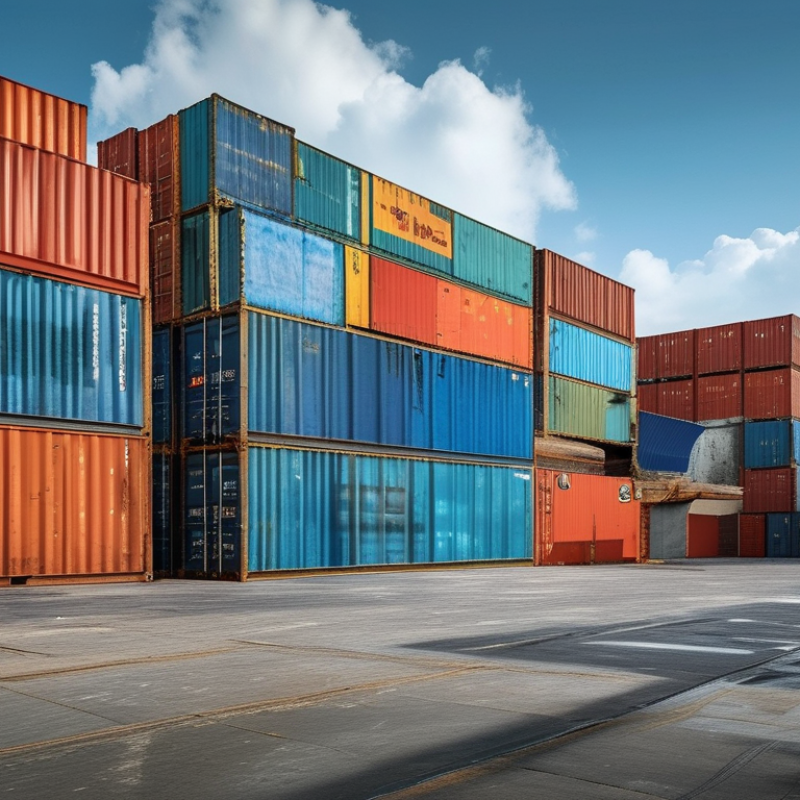
China’s container fabrication sector remains central to global freight equipment supply. Industry estimates place China’s share of global dry-container production above 90%, supported by steel access, established welding networks, and large export ports. UNCTAD’s Review of Maritime Transport 2024 reported that global maritime trade grew by about 2.4% in 2023. More cargo means continued demand for reliable boxes.
Production is concentrated in coastal manufacturing clusters. Facilities typically combine automated cutting, welding lines, shot blasting, painting, and water-tightness testing. Standard dry containers still dominate output, while refrigerated and specialized units require stricter insulation, electrical, and safety controls. Drewry’s Container Census 2024 indicated a global container fleet exceeding 50 million TEU. That scale rewards manufacturers with stable steel procurement and efficient quality inspection.
A top-ten comparison should examine more than annual output. Useful measures include certified production capacity, defect rates, delivery consistency, steel traceability, and after-sales repair support. ISO 668 dimensions and CSC safety requirements remain essential reference points. Yet public production figures are often incomplete. This weakens direct rankings. My own assessment is cautious: low prices can hide coating problems, uneven welds, or premature corrosion. Buyers should inspect sample units, review independent test records, and verify lifecycle performance. Cheap is not always efficient.
Standard dry containers manufactured in China generally follow ISO 668 dimensional specifications. The chart compares nominal external length, width, and height for the most widely fabricated container formats.
Dimensions are nominal external measurements in metres. Actual specifications, tare weight, payload, and internal dimensions may vary by design and applicable ISO requirements. Source: ISO 668 container classification and dimensions.
China Top 10 Container Fabrication Companies?
Selecting China’s top container fabrication companies requires more than comparing prices. Start with proven experience in the exact container type, production volume, and destination market. Ask for dated project records, factory photographs, and references from comparable buyers. A reliable supplier should explain steel grades, coating systems, insulation choices, and dimensional tolerances clearly. Experience appears in small details: aligned door bars, even weld beads, clean drainage holes, and floors that resist forklift traffic.
Professional capability should be verified through documented procedures. Check welding qualifications, incoming-material inspections, calibration records, and independent load or leak-test reports. Traceable heat numbers matter when repairs become necessary. Review quality checkpoints from cutting to final packing, not only a polished sample. Factory capacity also deserves scrutiny. A large workshop may outsource critical welding, while a smaller plant may control each stage better. Ask who performs the work.
Authority comes from transparent compliance, not confident sales language. Confirm that designs meet applicable ISO, CSC, transport, fire, and environmental requirements for the intended route. Request a pre-shipment inspection with measurable acceptance criteria. Payment terms, warranty coverage, spare-part access, and response times should be written clearly. Visit the production line if possible. Inspection plans often miss paint-thickness variation around corners. That weakness is easy to overlook, yet corrosion can begin there. Leave room for review; supplier selection is never perfectly objective.
China’s top 10 container fabrication companies are best assessed through verified production capability, not factory size alone. China supplies more than 95% of the world’s dry freight containers, according to Container xChange market data. The Drewry Container Census 2024 also identifies China as the dominant manufacturing base for new equipment. This concentration supports competitive pricing, strong steel procurement, and efficient export delivery.
A practical top-ten review should examine ISO 668 compliance, welding quality, coating thickness, factory audits, and repair support. It should also compare annual output, customization capacity, and documented quality records. UNCTAD’s Review of Maritime Transport 2024 shows continued growth in global containerized trade, increasing pressure on suppliers to deliver quickly. Still, production volume can hide weaknesses. A container may look flawless outside, while uneven floor welding appears after months of heavy loading. My assessment would include sample inspections, salt-spray results, door-seal tests, and independent certification. Even this method is imperfect. Factory conditions can change between visits.
Tips: Request recent inspection reports, not old brochures. Check corner casting dimensions with calibrated tools. Ask for steel mill certificates and coating records. Confirm spare-part availability before signing. A low quotation deserves careful scrutiny. Real cost includes transport, repairs, downtime, and rejected units. Procurement teams should also verify whether each shortlisted manufacturer can maintain consistent quality across large batches, rather than producing only a few impressive samples.
China Top 10 Container Fabrication Companies: Products, Materials, and Manufacturing Capabilities
China’s container fabrication sector serves dry cargo, refrigerated, open-top, and specialized transport needs. UNCTAD’s Review of Maritime Transport 2024 reports that global maritime trade reached about 12.3 billion tonnes in 2023. This volume supports continuing demand for standardized container production.
Most factories use weathering steel for side panels, corner posts, rails, and frames. China produced approximately 1.005 billion tonnes of crude steel in 2024, according to World Steel Association data. This supply base can support large-volume fabrication. Typical production lines include automated cutting, robotic welding, shot blasting, coating, floor installation, and water-leak testing. Experienced manufacturers should also demonstrate compliance with ISO 668, ISO 1496, and applicable CSC requirements. Their product range may include 20-foot and 40-foot units, high-cube models, refrigerated boxes, and custom platforms. Yet capacity figures can be difficult to compare. Some factories report theoretical output, not verified annual deliveries. That detail deserves closer review.
Tips: Check steel thickness, coating systems, floor materials, weld inspection records, and testing procedures. Ask for recent third-party inspection reports. Confirm whether production capacity includes refrigeration and custom units. A low quoted price may reflect thinner materials or limited testing. Sustainability also matters; the International Energy Agency notes that steelmaking remains highly energy-intensive, so recycled content and efficient coating processes should be assessed.
Comparative industry profile of common container fabrication capabilities available from Chinese manufacturers
| No. | Fabrication Profile | Primary Products | Main Materials | Typical Dimensions | Manufacturing Capabilities | Applicable Standards | Typical Use Cases |
|---|---|---|---|---|---|---|---|
| 01 | Standard Dry Container Fabricator | 20 ft and 40 ft dry freight containers; 40 ft high-cube units | Weathering steel, structural steel, marine plywood, zinc-coated fittings | 20 ft: 6,058 mm; 40 ft: 12,192 mm; high cube height: 2,896 mm | Automated cutting, panel forming, welding, shot blasting, primer and topcoat application | ISO 668, ISO 1496-1, CSC safety requirements | General cargo, retail distribution, factory-to-port logistics |
| 02 | Heavy-Duty Cargo Container Fabricator | Reinforced dry containers and high-load floor containers | High-strength weathering steel, reinforced corner posts, hardwood or composite flooring | Common lengths: 20 ft and 40 ft; payload depends on design and certification | Additional cross-members, strengthened side rails, reinforced door frames, load testing | ISO 1496-1, CSC, customer load and handling specifications | Steel products, machinery, dense cargo, project logistics |
| 03 | Refrigerated Container Fabricator | 20 ft and 40 ft refrigerated containers | Stainless steel or coated steel interior, polyurethane insulation, aluminum components | 20 ft and 40 ft; high-cube reefer height commonly 2,896 mm | Insulated panel assembly, vapor sealing, refrigeration-unit installation, temperature testing | ISO 1496-2, CSC, electrical safety and refrigeration test requirements | Food, pharmaceuticals, flowers and temperature-sensitive cargo |
| 04 | Open-Top and Hard-Top Container Fabricator | Open-top containers, removable-roof units and bulk cargo containers | Weathering steel, removable tarpaulin or steel roof, reinforced door headers | Usually 20 ft and 40 ft ISO footprints | Removable roof fabrication, high-door clearance design, lifting and lashing-point installation | ISO 668, ISO 1496-1, CSC and lifting-point requirements | Scrap metal, timber, stone, machinery and oversized cargo |
| 05 | Flat-Rack and Platform Container Fabricator | Fixed-end flat racks, collapsible flat racks and platforms | High-strength steel, hardwood decking, forged lashing rings and corner castings | 20 ft and 40 ft ISO footprints; capacity varies by structural design | Heavy-section welding, folding mechanisms, lashing-point integration, structural load testing | ISO 668, ISO 1496-5, CSC and cargo-securing requirements | Heavy machinery, vehicles, pipes, tanks and project cargo |
| 06 | Tank Container Fabricator | ISO tank containers for liquids, gases and powders | Stainless steel pressure vessel, carbon-steel frame, valves and protective fittings | Commonly 20 ft ISO frame; tank volume selected according to cargo and regulations | Pressure-vessel welding, non-destructive testing, hydrostatic testing and valve installation | ISO 1496-3, CSC, ADR, RID, IMDG and applicable pressure-vessel codes | Chemicals, food-grade liquids, gases and hazardous materials |
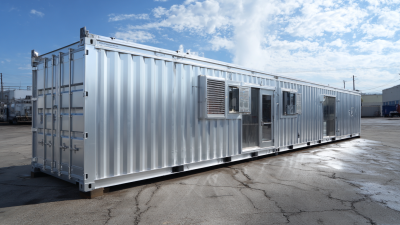
| 07 | Special-Purpose Container Fabricator | Workshop, generator, control-room and equipment containers | Carbon steel, insulated sandwich panels, aluminum, electrical-grade materials | ISO-compatible 10 ft, 20 ft and 40 ft modules are commonly configured | Cut-outs, ventilation, cable routing, acoustic treatment, doors, windows and equipment mounts | ISO 668 where applicable; electrical, fire and occupational safety requirements | Construction sites, mining, energy, telecommunications and emergency response |
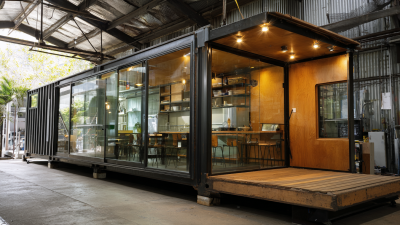
| 08 | Modular Building Container Fabricator | Accommodation, office, classroom and sanitary modules | Galvanized steel frames, insulated panels, cement board, glass and finished flooring | Common module widths include approximately 2,438 mm; lengths are project-configurable | Factory fit-out, plumbing, electrical systems, partitioning, insulation and stackable modular design | Local building codes, fire regulations, electrical codes and transport requirements | Temporary housing, site offices, classrooms, clinics and worker facilities |
| 09 | Customized Logistics Container Fabricator | Side-opening, double-door, partitioned and ventilated containers | Weathering steel, aluminum panels, marine plywood, rubber seals and stainless fittings | 10 ft, 20 ft, 40 ft and 40 ft high-cube formats are commonly available | CNC cutting, custom openings, ventilation systems, partition walls and special door assemblies | ISO 668 and CSC when intended for international intermodal transport | Warehouse storage, event logistics, spare parts and specialized distribution |
| 10 | Refurbishment and Reconditioning Fabricator | Repaired, repainted and converted used containers | Existing weathering steel, replacement flooring, corrosion-resistant coatings and new seals | Primarily 20 ft, 40 ft and 40 ft high-cube units | Damage inspection, panel replacement, floor repair, door alignment, blasting, painting and leak testing | CSC inspection requirements where applicable; ISO dimensional checks | Budget-sensitive shipping, storage, construction and conversion projects |
China’s top container fabrication companies are often judged by more than production capacity. Quality begins with controlled steel selection, accurate cutting, and consistent welding. Reliable factories maintain ISO 9001 systems and follow recognized container safety requirements, including CSC-related inspection procedures where applicable. They should provide material certificates, welding records, dimensional reports, and coating data. A finished container must survive lifting, stacking, sea air, and repeated handling. Small weld defects can become expensive failures.
Global market reach also depends on practical reliability. Experienced manufacturers understand port requirements, export documentation, inspection schedules, and regional delivery conditions. Strong suppliers can support prototype approval, bulk orders, replacement parts, and after-sales communication across time zones. However, a certificate alone proves little. Its scope, expiry date, and issuing body require careful checking. Some buyers, including myself, have trusted polished factory presentations too quickly. That was not enough.
Tips: Request a recent factory audit and a sample inspection report. Compare steel grades, floor materials, door seals, and paint thickness. Ask whether testing covers the exact container model you plan to purchase. Confirm loading photos, packing methods, and shipping responsibilities before signing. Independent inspection is useful, especially for a first order. Even strong suppliers may show uneven results between batches, so continuous quality checks remain necessary.
Subscribe to our newsletter for the latest news and exclusive offers.
We hold a long-term view when we build modular rooms taking into consideration your changing needs. Whether it’s shifting your workspace to a new site, redesigning your unit to fit new requirements, or simply clearing the area at the end of the project, our Dismantling & Reassembling teams are pressed into service to get the job done in the quickest possible time and minimum resource wastage.
We understand that every project is unique and therefore has a different set of requirements. That’s why we believe in customizing our solutions to fit individual needs. We are equipped with the right talents, technology, and skillset to offer bespoke modular units, without compromising on turnaround time or quality.
The benefits of choosing Containers ME continues long after the installation of the units as we provide aftersales service for as long as you need. All you have to do is sign the Annual Maintenance Contract (AMC) and enjoy technical support for all the maintenance-related issues. By signing the contract, you can rest assured that a highly professional team of dedicated staff are at your service all year round to attend to your needs.
We specialize in Customized Container Solutions designed to meet diverse needs across the UAE. Our offerings include customized modular containers that cater to various applications, from tailor-made container solutions to bespoke container designs.
Whether you’re looking for personalized container homes or custom modular containers, we have you covered. Our customized container offices provide functional workspaces, while our customized portable containers ensure flexibility on-site. Explore our range of custom container storage units and customized cargo containers to optimize your space.
We also offer custom container leasing and custom container fabrication services, along with customized sea containers designed for secure transport. For specialized needs, our specialized container modifications will help you create the perfect solution for your requirements in both Dubai and the broader UAE.