
Blogs

Top 10 Depth Filtration Suppliers for Global Buyers

Global demand for reliable depth filtration continues to rise across biopharmaceutical, food and beverage, chemical, and water-treatment operations. Grand View Research identifies filtration as a growing industrial market, supported by stricter quality controls, expanding biologics production, and increasing process-water requirements. MarketsandMarkets also reports sustained growth in the depth filtration sector, especially for single-use systems and high-throughput liquid clarification.

These trends make supplier selection more complicated than comparing catalog prices. A filter that performs well in a pilot plant may behave differently during continuous production. Buyers should examine retention ratings, flow capacity, filter-media composition, extractables data, validation support, and regional service coverage. Documentation matters. So does delivery reliability.

This guide reviews ten depth filtration suppliers serving global buyers. The assessment considers product breadth, manufacturing capabilities, technical expertise, quality systems, customization options, and evidence from recognized industry applications. Suppliers with strong pharmaceutical experience may not offer the best solution for wine clarification or industrial wastewater. Context changes everything.

Reports from the International Society for Pharmaceutical Engineering and the U.S. Food and Drug Administration emphasize process consistency, traceability, and risk-based qualification. These principles shape the comparison. However, public supplier information is uneven, and marketing claims can be difficult to verify independently. Data can mislead. Therefore, readers should confirm current certifications, performance results, lead times, and local compliance requirements before purchasing. This list is a practical starting point, not a substitute for technical trials, validation, or site-specific engineering judgment.
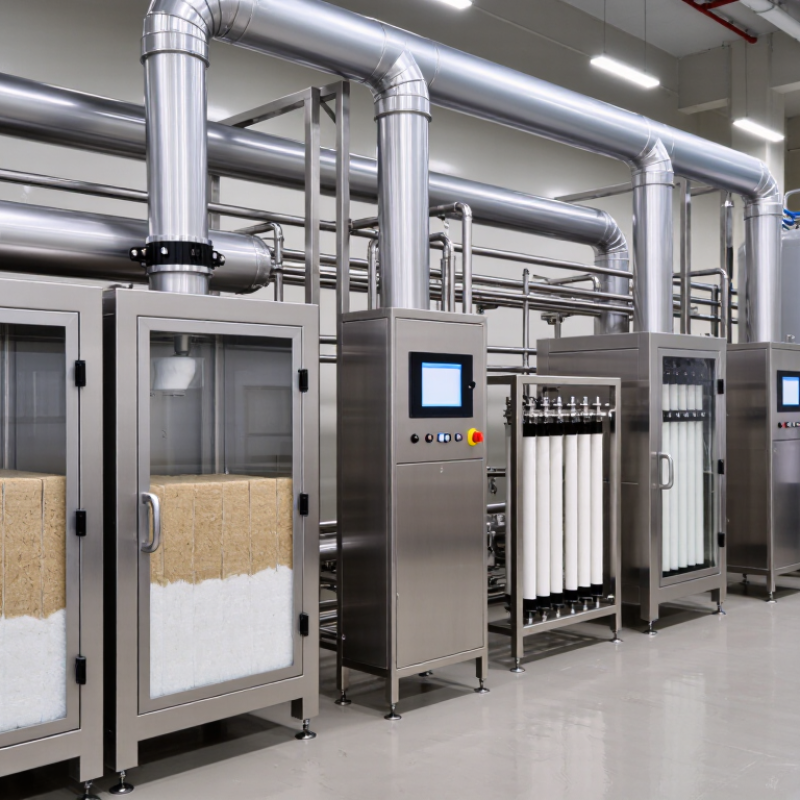
Top 10 Depth Filtration Suppliers for Global Buyers

What Depth Filtration Is and Where It Is Used

Top 10 Depth Filtration Suppliers for Global Buyers

What Depth Filtration Is and Where It Is Used

Depth filtration traps particles throughout a thick porous medium, rather than only on its surface. Fibers, channels, and filter aids create a tortuous path for suspended solids. This design helps manage variable feed conditions, but it can also increase pressure drop. The distinction is easy to blur.

depth filters are used in municipal water treatment, beverage clarification, pharmaceutical processing, biotechnology, and industrial wastewater systems. In beverage production, they remove yeast, haze-forming particles, and processing residues. In bioprocessing, they clarify cell cultures before finer membrane filtration. The World Health Organization and UNICEF reported that 2.2 billion people lacked safely managed drinking water in 2022. That figure shows why reliable pretreatment remains important, especially where raw-water quality changes daily.

Supplier evaluation should examine retention ratings, filter-area capacity, extractables, cleanability, and documented validation data. The 2023 MarketsandMarkets depth filtration report identified bioprocessing, food and beverage, and water treatment as major application areas, with continued market growth expected through 2028. However, market growth does not guarantee performance. A filter that works well in a pilot test may clog quickly at full scale. Operators should compare pressure-drop curves, batch records, and actual feed samples. Perfect filtration is unrealistic. Good engineering leaves room for uncertainty.

Top 10 Depth Filtration Suppliers for Global Buyers - What Depth Filtration Is and Where It Is Used

Rank Supplier Profile Typical Product Formats Common Filter Media Typical Nominal Retention Range Primary Industries Served Typical Flow-Rate Positioning Key Buyer Evaluation Factors
1 Supplier Profile A Cartridge filters Capsules Sheet modules Cellulose, polypropylene, polyester, and activated carbon blends Approximately 0.5–100 µm, depending on media structure and rating method Biopharmaceutical processing, beverages, water treatment, and chemicals Medium to high; scalable from laboratory batches to industrial systems Media compatibility, extractables, pressure drop, batch consistency, and documentation
2 Supplier Profile B Depth cartridges Bag filters Large-format modules Graded polypropylene and multilayer synthetic nonwoven media Approximately 1–200 µm for prefiltration and particulate removal Industrial water, food ingredients, coatings, inks, and process chemicals High; designed for high dirt-holding capacity in continuous processes Dirt-holding capacity, housing fit, operating temperature, chemical resistance, and replacement cost
3 Supplier Profile C Laboratory capsules Process cartridges Single-use assemblies Cellulosic depth media with synthetic support layers Approximately 0.2–50 µm for clarification and bioburden reduction stages Bioprocessing, fermentation, vaccine production, and laboratory clarification Low to medium; optimized for controlled flow and low-volume processing Low protein binding, sterilization method, integrity testing, lot traceability, and cleanroom production
4 Supplier Profile D Pleated depth cartridges High-area modules Vent filters Polypropylene microfiber and melt-blown polymer media Approximately 0.5–75 µm, with graded layers for staged particle capture Pharmaceuticals, cosmetics, electronics chemicals, and purified water Medium to high; high surface area helps reduce pressure loss Effective filtration area, pressure-drop profile, sterilization compatibility, and installation footprint
5 Supplier Profile E Filter sheets Plate-and-frame modules Sheet cartridges Cellulose, diatomaceous earth, perlite, and mineral-based blends Approximately 0.2–20 µm for clarification and fine particulate retention Wine, beer, edible oils, food processing, and specialty liquids Medium; suitable for batch clarification and polishing applications Clarification performance, filter-aid composition, taste or odor neutrality, disposal, and food-contact status
6 Supplier Profile F Bag filters Basket inserts Duplex filtration sets Needled felt, monofilament mesh, polypropylene, and polyester Approximately 1–1,000 µm, depending on felt grade or mesh opening Paints, resins, hydraulic fluids, cooling water, and general manufacturing High; commonly used for bulk solids loading and coarse-to-medium filtration Bag construction, sealing method, bypass prevention, micron consistency, and change-out time
7 Supplier Profile G Carbon depth cartridges Carbon blocks Pre-filter modules Granular activated carbon, carbon block, cellulose, and polymer binders Particle retention commonly approximately 1–50 µm; adsorption capacity varies by carbon grade Drinking water, food service, chemical processing, and odor-control systems Low to medium; performance depends on contact time and contaminant loading Carbon source, iodine number, pressure drop, contact time, contaminant profile, and certification requirements
8 Supplier Profile H High-temperature cartridges Metal-supported elements Process housings Sintered metal, ceramic, glass fiber, and high-temperature synthetic media Approximately 0.5–100 µm, subject to media construction and process conditions Petrochemicals, polymers, hot gases, specialty chemicals, and industrial fluids Medium to high; selected for demanding temperature and pressure conditions Maximum operating temperature, pressure rating, cleanability, corrosion resistance, and service life
9 Supplier Profile I Gas-depth elements Vent cartridges Compressed-air filters Borosilicate glass fiber, polypropylene, polyester, and coalescing media Liquid particle ratings commonly approximately 0.1–10 µm; gas applications use separate aerosol or coalescing specifications Compressed air, gases, fermentation, tank venting, and sterile process systems Medium; optimized for low aerosol carryover and controlled pressure drop Gas compatibility, aerosol removal, moisture handling, integrity testing, sterilization, and differential pressure
10 Supplier Profile J String-wound cartridges Melt-blown cartridges Household modules Polypropylene, cotton, rayon, and blended yarn media Approximately 1–100 µm for sediment reduction and general prefiltration Residential water, irrigation, food processing, plating, and general-purpose liquid filtration Low to medium; appropriate for point-of-use and moderate-flow systems Nominal versus absolute rating, core material, end-cap design, chemical compatibility, and replacement availability
What depth filtration is: Depth filtration captures particles throughout the thickness of a porous medium rather than only on its surface. It is widely used for clarification, prefiltration, sediment removal, particle-load reduction, and protection of downstream membrane or equipment systems. Actual performance depends on particle size distribution, fluid viscosity, temperature, pressure, media structure, and the selected rating method.

How to Evaluate Depth Filtration Suppliers Worldwide

When evaluating depth filtration suppliers worldwide, buyers should examine evidence, not polished brochures. MarketsandMarkets estimates the global bioprocessing market will reach about USD 69.5 billion by 2028, with strong demand for reliable filtration systems. This growth increases supplier choice, but also increases evaluation risk. Request product specifications for flow rate, capacity, pressure limits, retention performance, and extractables. Data should cover actual operating conditions, not only ideal laboratory tests.

A credible supplier provides lot traceability, change-control records, validation support, and clear quality certificates. Review compliance with relevant quality systems, including ISO 13485 where medical applications apply. PDA Technical Report guidance also supports risk-based evaluation of filtration processes and validation methods. Ask for bacterial retention data, compatibility results, and integrity-test procedures. Small details matter. For example, a filter rated at 500 liters may perform differently with high-viscosity fluids.

Supplier experience should include pilot testing, technical troubleshooting, and documented customer support response times. Compare lead times across regions, spare-part availability, packaging controls, and transport conditions. A supplier may offer attractive pricing but weak deviation handling. That is a warning. I would also audit at least one production site, although travel budgets often discourage this step. A remote audit is useful, but it cannot reveal every process weakness. Independent test reports, realistic trial runs, and transparent limitations provide stronger evidence than marketing claims.

Top 10 Depth Filtration Suppliers by Product Range and Expertise

Top 10 Depth Filtration Suppliers by Product Range and Expertise

Global buyers often compare depth filtration suppliers by more than catalog size. A reliable supplier should understand fluid viscosity, particle loading, temperature, and required throughput. The strongest ten supplier profiles cover cartridge filters, lenticular modules, filter sheets, and laboratory-scale devices. Some also provide housings, prefilters, and validation documents. Practical experience matters here. A broad catalog means little when technical support is weak.

The leading profiles include a supplier specializing in beverage clarification, one focused on bioprocess fluids, and another serving chemical manufacturing. Others offer cellulose-based sheets, synthetic media, ceramic elements, or high-capacity cartridge systems.

One supplier stands out for small-batch development. Another supports automated production lines. A further specialist provides custom pore structures for difficult liquids. The remaining profiles combine standard products with application testing, pilot equipment, and replacement compatibility. This range helps buyers match filtration stages instead of forcing one product into every process.

Experienced suppliers usually provide flow-rate data, retention ratings, pressure limits, and material compatibility records. Ask for test conditions, not just performance claims. Factory audits can reveal inconsistent assembly or weak traceability. I have found that sample trials often challenge the first selection. That is useful. It exposes hidden problems, such as rapid clogging, poor sealing, or excessive product loss. No ranking is perfect. Supplier expertise should be judged against the actual liquid, scale, compliance needs, and maintenance habits of each facility.

Comparing Materials, Certifications, Capacity, and Technical Support

Top 10 Depth Filtration Suppliers for Global Buyers

Comparing Materials, Certifications, Capacity, and Technical Support

A credible top-ten shortlist should compare more than quoted prices. In plant audits, I examine cellulose, polypropylene, diatomaceous earth, and carbon media separately. Each material handles turbidity, chemical exposure, and extractables differently. A 2024 Grand View Research report valued the global depth filtration market at approximately USD 2.2 billion in 2023. It also projects continued growth through 2030. That expansion increases supplier choices, but not necessarily supplier quality.

Capacity needs evidence. Ask for monthly output, batch records, change-control procedures, and spare-media availability. A supplier may claim large capacity while outsourcing critical conversion steps. That deserves scrutiny. Certification also requires careful reading. ISO 9001 certification supports quality-system control, but it does not guarantee sterile filtration performance. The ISO Survey 2023 recorded more than 1.2 million ISO 9001 certificates worldwide. Therefore, certification alone cannot separate strong suppliers from average ones. Request certificates, audit scope, expiration dates, and relevant validation packages.

Technical support often decides project success. Strong suppliers provide compatibility testing, pressure-drop data, sizing calculations, and troubleshooting during scale-up. Response times should be written into service agreements. Useful support includes on-site sampling and documented root-cause analysis. Still, no supplier performs perfectly. Data may be incomplete, and pilot results can differ from production behavior. I would rank transparent limitations above impressive claims. A reliable comparison should weight material consistency, regional inventory, regulatory documentation, and practical engineering support equally.

How Global Buyers Can Select and Qualify the Right Supplier

Top 10 Depth Filtration Suppliers for Global Buyers

How Global Buyers Can Select and Qualify the Right Supplier

Global demand for depth filtration continues to grow. Grand View Research valued the market at approximately USD 2.3 billion in 2023. Its report also forecasts strong growth through 2030. More suppliers will enter the field. Selection will become harder. Buyers should compare filtration performance, not catalog size. Ask for particle-retention data, flow-rate curves, extractables results, and documented lot traceability. A polished brochure is not evidence.

I have seen qualification projects fail because samples were tested under ideal conditions. Real production used colder fluids, higher solids, and longer cycles. Request trials using your actual process liquid. Measure pressure rise, throughput, filtrate clarity, and cartridge integrity after use. The data should be repeatable.

Check the supplier’s quality system and change-control process. ISO 9001 certification helps, but it does not replace a technical audit. Review calibration records, deviation handling, complaint history, and backup manufacturing capacity. The 2023 Deloitte Global Life Sciences Outlook highlights supply resilience and digital traceability as continuing priorities for life-science buyers. These points also matter in industrial filtration. Ask where critical materials originate. Confirm lead times in writing. Shorter is not always safer.

Do not select on price alone. A cheaper element may require earlier replacement or create more waste. That cost is easy to miss. Supplier scoring should include technical fit, validation support, delivery reliability, documentation quality, and communication speed. Leave room for doubt. One successful test does not prove long-term performance.

Top 10 Depth Filtration Suppliers for Global Buyers

How global buyers can select and qualify the right supplier

The chart presents a practical 100-point qualification model for comparing depth filtration suppliers. Buyers should place the greatest emphasis on verified filtration performance and quality-system control, followed by regulatory documentation, supply continuity, technical support, and total cost. The model can be adapted to the application, industry, and target market.

Article Source:

Plug & Play Installation

Our installation services are top-notch, delivering modular systems for any application on time in plug & play condition. We leave nothing for you to figure out, set up, or fix. All you’ve to do is just step in, and get going with your business.

Dismantling & Reassembling

We hold a long-term view when we build modular rooms taking into consideration your changing needs. Whether it’s shifting your workspace to a new site, redesigning your unit to fit new requirements, or simply clearing the area at the end of the project, our Dismantling & Reassembling teams are pressed into service to get the job done in the quickest possible time and minimum resource wastage.

Interior Designing

Our interior designs combine both functional and aesthetic aspects to provide you with physical and emotional comfort. We ask you for your preferences and give the best possible solutions aligned to your tastes. Our units are built to be modern, stylish, and elegant.

Bespoke Solutions

We understand that every project is unique and therefore has a different set of requirements. That’s why we believe in customizing our solutions to fit individual needs. We are equipped with the right talents, technology, and skillset to offer bespoke modular units, without compromising on turnaround time or quality.

Aftersales Service

The benefits of choosing Containers ME continues long after the installation of the units as we provide aftersales service for as long as you need. All you have to do is sign the Annual Maintenance Contract (AMC) and enjoy technical support for all the maintenance-related issues. By signing the contract, you can rest assured that a highly professional team of dedicated staff are at your service all year round to attend to your needs.

Customized Container Solutions

We specialize in Customized Container Solutions designed to meet diverse needs across the UAE. Our offerings include customized modular containers that cater to various applications, from tailor-made container solutions to bespoke container designs.

Whether you’re looking for personalized container homes or custom modular containers, we have you covered. Our customized container offices provide functional workspaces, while our customized portable containers ensure flexibility on-site. Explore our range of custom container storage units and customized cargo containers to optimize your space.

We also offer custom container leasing and custom container fabrication services, along with customized sea containers designed for secure transport. For specialized needs, our specialized container modifications will help you create the perfect solution for your requirements in both Dubai and the broader UAE.

Get a quote

Get a quote





