Blogs

Top 10 Types of Shipping Containers for Global Buyers?

Choosing among the top containers requires more than comparing prices on a supplier’s website. Global buyers must match container design with cargo type, route, climate, storage period, and handling equipment. A 20-foot dry container may suit boxed machinery, while a refrigerated unit protects fresh produce during long ocean routes. The wrong choice can create hidden costs, including wasted space, repair delays, and unsuitable temperature control.

Christian Roeloffs, CEO of Container xChange, describes the decision clearly: “A container’s value depends on its condition, location, and intended use.” That practical view matters. A lower-priced container near a busy port may be more useful than a newer unit hundreds of miles away. Buyers should check CSC plates, floor condition, door seals, rust levels, ventilation, and inspection records. Small details matter. A damaged gasket can expose cargo to rain. A weakened floor can complicate loading heavy equipment.

This guide introduces ten major container types used by international buyers. It covers standard dry vans, high-cube models, reefers, open-top units, flat racks, tank containers, insulated boxes, side-opening containers, half-height designs, and specialized options. Each type solves a different logistics problem, though none is perfect for every shipment. Specifications can vary between manufacturers and leasing companies. Buyers should confirm dimensions, payload limits, certification, and local handling requirements before ordering. The list is a useful starting point, not a substitute for a physical inspection or professional freight advice.
Top 10 Types of Shipping Containers for Global Buyers?

What Shipping Containers Are and How They Differ

Shipping containers are standardized steel units designed to protect cargo during sea, rail, and road transport. Their corner fittings allow cranes, trucks, and locking systems to handle them efficiently. However, “standardized” does not mean identical. Internal dimensions, door placement, ventilation, insulation, and weight limits can differ significantly.

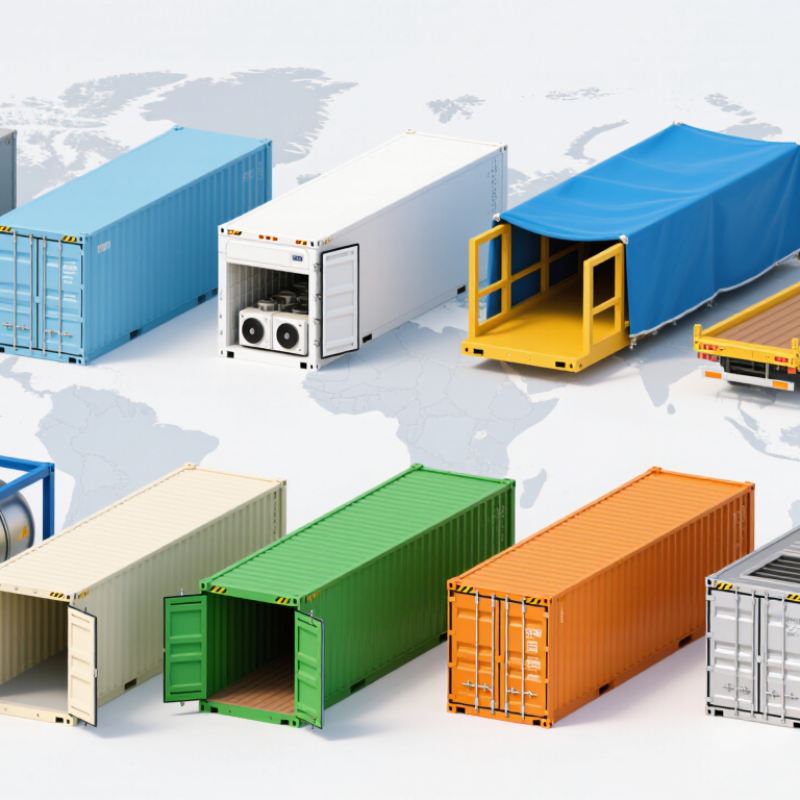
The common dry container suits boxed goods, furniture, and machinery. A high-cube container adds extra height for bulky cargo. Refrigerated containers control temperature for food, medicine, and other sensitive products. Open-top containers allow cranes to load tall or heavy items. Flat racks have folding ends and support oversized machinery. Platform containers provide a strong, open base. Tank containers carry approved liquids or gases under strict technical controls. Ventilated containers reduce moisture buildup. Insulated containers help stabilize temperature without active cooling. Side-opening containers provide wider access than a single end door.

Choosing the right type requires more than comparing prices. Measure the cargo, including pallets, lifting points, and protective packaging. Check the maximum payload, tare weight, floor condition, door seals, and recent inspection records. A used container may look sound outside but hide corrosion beneath the floor. I have found that buyers often underestimate loading clearance. That mistake becomes expensive at the port. Climate, route length, handling equipment, and destination rules also affect the decision. Specifications should be confirmed with the supplier and transport operator before payment.
Ten Main Container Types for International Cargo

Ten Main Container Types for International Cargo

Selecting the right container begins with the cargo, route, and handling conditions. The standard dry container suits cartons, furniture, machinery, and most general freight. A high-cube container adds extra height for bulky pallets. Refrigerated containers control temperature for food, medicine, and other sensitive goods. Insulated containers reduce temperature changes without active cooling.

Open-top containers allow cranes to load tall machinery through the roof. Flat-rack containers support heavy, wide, or unusually shaped equipment. Platform containers provide a strong base for oversized cargo. Tank containers carry approved liquids, gases, or powders under strict technical requirements. Ventilated containers help cargo that needs airflow, such as certain agricultural products. Side-opening containers provide wider access when forklifts cannot work efficiently through the end doors.

Tips: Confirm internal dimensions, door openings, payload limits, and cargo securing points before booking. Ask for temperature records when using refrigerated equipment. Check whether the destination accepts the selected container type. A loading plan with photos can prevent expensive disputes.

In practical shipping work, container names can sound clearer than they are. A high-cube unit may offer more volume, but the cargo still needs stable stacking. Flat racks simplify oversized loading, yet lashing space can become a serious limitation. I have seen plans fail because the cargo fit inside, but could not pass through the doors. Specifications help. Careful measurement helps more.

Top 10 Types of Shipping Containers for Global Buyers

Typical maximum payload capacity by common ISO container type

Payload figures are representative capacities in metric tonnes. Actual limits vary by container design, tare weight, maximum gross mass regulations, cargo distribution, and route requirements.

Cargo Uses, Sizes, and Features of Each Container Type

Top 10 Types of Shipping Containers for Global Buyers?

Cargo Uses, Sizes, and Features of Each Container Type

Choosing a container starts with the cargo, not its appearance. Standard dry containers usually measure 20 or 40 feet. They suit cartons, machinery, furniture, and general freight. High-cube units add about one foot of height. That extra space helps with lightweight, bulky goods. Side-door containers provide wider access for long items or frequent loading. Their door hardware needs careful inspection.

Refrigerated containers, often called reefers, control temperature for food, medicine, and sensitive materials. They require a reliable power supply and regular temperature checks. Insulated containers reduce heat transfer but do not always provide active cooling. Ventilated containers support cargo needing airflow, such as coffee, produce, or timber.

Open-top containers allow cranes to load tall or heavy cargo. Their removable roof makes loading easier, but weather protection becomes weaker.

Flat-rack containers carry oversized machinery, pipes, and vehicles. Folding ends improve storage and handling. Platform containers have no side walls, making them useful for exceptionally wide or heavy cargo. Tank containers transport approved liquids, including food-grade or industrial liquids, under strict specifications. They need compatible fittings and verified pressure ratings.

A container can look suitable and still fail operationally. Confirm internal dimensions, payload, door openings, floor strength, and inspection records before booking. Cargo measurements are often rounded too casually. That mistake can create expensive delays.

How to Choose the Right Container for Global Shipping

Top 10 Types of Shipping Containers for Global Buyers?

Choosing the right container starts with the cargo, not the quoted freight rate. Standard dry containers suit boxed goods, furniture, and machinery. High-cube units provide extra internal height for bulky cartons. Refrigerated containers protect seafood, produce, and pharmaceuticals within controlled temperature ranges. Ventilated containers help cargo that needs airflow. They are not suitable for every climate.

Open-top containers handle tall machinery loaded by crane. Flat racks carry oversized equipment that exceeds standard width or height. Tank containers transport approved liquids under strict technical controls.

Insulated containers reduce temperature changes without active cooling. Side-door containers improve access for long or palletized loads. Half-height containers are useful for dense materials, where low center-of-gravity loading matters.

UNCTAD’s Review of Maritime Transport 2024 reported that seaborne trade grew about 2.4% in 2023 and remained vulnerable to route disruption. That makes equipment availability and transit planning important.

Check internal dimensions, maximum payload, door openings, floor condition, and container inspection records. A 40-foot high-cube container may offer useful volume, but its payload limit can still restrict heavy cargo. For temperature-sensitive goods, confirm the required temperature range, power supply, ventilation, and data logging.

The World Bank’s Logistics Performance Index 2023 also shows that reliability depends on tracking, customs efficiency, and delivery predictability, not container size alone.

I have seen buyers choose the cheapest box first. That decision often creates extra handling, damaged packaging, or wasted space. Ask a qualified forwarder to test the loading plan before booking.

International Standards, Regulations, and Buyer Considerations

Global buyers commonly compare ten container types: dry van, high cube, refrigerated, open top, flat rack, platform, tank, insulated, ventilated, and side-door units. Each serves a different cargo profile. UNCTAD’s Review of Maritime Transport 2024 reported 2.4% growth in global seaborne trade during 2023, increasing pressure on equipment availability and inspection quality.

International compliance begins with ISO 668, which defines container dimensions, ratings, and corner fittings. The International Convention for Safe Containers requires a valid CSC safety approval before most containers enter international service. Refrigerated units need documented temperature performance, while tank containers require suitable pressure, material, and periodic inspection records. Open-top and flat-rack units need careful checks for lashing points, floor strength, and cargo height.

A buyer should verify internal dimensions, maximum payload, tare weight, door clearance, and inspection dates. Ask for clean interior photographs and the latest survey report. It matters.

UNCTAD also highlights continuing port congestion and operational disruption, so transit planning should include buffer time. A cheaper used container may hide corrosion beneath fresh paint. That is an uncomfortable lesson. Buyers should compare total landed cost, including repositioning, cleaning, certification, insurance, and local handling. Requirements can differ between loading, transit, and destination countries. An experienced inspection before payment remains valuable, although it cannot remove every risk.

Top 10 Types of Shipping Containers for Global Buyers? - International Standards, Regulations, and Buyer Considerations

No. Container Type Typical Nominal Size Main Cargo Applications Typical Technical Characteristics Key International Standards and Regulations Buyer Considerations
1 Standard Dry Container 20 ft or 40 ft; approximately 2.59 m external height Cartons, machinery, furniture, packaged goods, and general cargo Weather-resistant steel construction; typical internal height about 2.39 m; payload commonly up to approximately 28,000 kg for a 20 ft unit, subject to the certified maximum gross mass ISO 668 dimensional classification; ISO 1496-1 testing and performance; valid CSC safety approval for international sea transport Confirm internal dimensions, door opening, tare weight, floor condition, maximum gross mass, CSC plate, and cargo-securing points
2 High-Cube Dry Container 40 ft or 45 ft; approximately 2.90 m external height Lightweight, high-volume cargo such as textiles, retail products, packaging, and furniture Provides about 30 cm more internal height than a standard-height container; greater cubic capacity without a proportional increase in payload ISO 668; ISO 1496-1; CSC Convention requirements; port and inland route height restrictions may also apply Check bridge, tunnel, rail, and terminal clearance; compare volume utilization rather than selecting by length alone
3 Refrigerated Container (Reefer) Commonly 20 ft or 40 ft high-cube Chilled or frozen food, pharmaceuticals, chemicals, flowers, and temperature-sensitive products Insulated walls and powered refrigeration unit; operating temperature range depends on the equipment and cargo specification; requires electrical power during storage and transport ISO 1496-2; CSC Convention; IMDG Code where applicable; cargo may also require sanitary, food-safety, or pharmaceutical controls Define set point, acceptable temperature range, ventilation, fresh-air exchange, power requirements, data logging, and pre-trip inspection criteria
4 Open-Top Container 20 ft or 40 ft Bulk cargo, scrap, timber, machinery, and items loaded by crane or requiring extra height Removable fabric roof or convertible roof arrangement; top-loading capability; cargo must remain within permitted mass and securing limits ISO 1496-1; ISO 668; CSC safety approval; cargo securing must comply with applicable carrier and transport rules Measure the actual usable height, verify roof-bow and tarp condition, check loading method, and confirm whether over-height cargo is accepted on the intended route
5 Flat Rack Container 20 ft or 40 ft; fixed-end or collapsible-end designs Heavy machinery, vehicles, steel products, pipes, tanks, and over-width or over-height cargo Strong floor with folding or fixed end walls; no conventional side walls or roof; lashing rings and corner fittings support specialized securing ISO 1496-5; ISO 668; CSC Convention; CTU Code guidance for packing and securing cargo transport units Verify concentrated-load limits, lashing capacity, cargo dimensions, center of gravity, lifting points, and whether the shipment will be accepted as out-of-gauge cargo
6 Platform Container Usually 20 ft or 40 ft Very heavy, extra-wide, or unusually shaped project cargo and industrial equipment Reinforced load platform without side walls or end walls; designed for cargo that cannot fit inside a closed or flat-rack container ISO 1496-5; ISO 668; CSC Convention; route-specific project-cargo and cargo-securing requirements Obtain an engineered loading and lashing plan; confirm point loads, permitted overhang, lifting arrangements, and terminal handling capability
7 Tank Container Commonly a 20 ft ISO frame; tank volume varies by design and cargo Liquids, liquefied gases, powders, and hazardous or non-hazardous bulk products Pressure vessel mounted in an ISO frame; fittings, insulation, heating, and lining depend on the product and service temperature ISO 1496-3; CSC Convention; IMDG Code for sea transport of dangerous goods; ADR, RID, or other modal rules may apply inland Confirm product compatibility, tank code, pressure rating, inspection date, filling limits, cleaning certificate, valve protection, and dangerous-goods documentation
8 Ventilated Container Most commonly 20 ft Cargo requiring passive air exchange, including selected agricultural products, coffee, cocoa, and other moisture-sensitive goods Ventilation openings or controlled ventilation system; not designed to provide active refrigeration or precise temperature control ISO 668; ISO 1496-1; CSC Convention; commodity-specific phytosanitary and food-safety rules may apply Confirm the required airflow, humidity control, pest prevention, odor condition, cleanliness, and whether passive ventilation is sufficient for the commodity
9 Insulated Container Often 20 ft or 40 ft; dimensions vary according to the insulation system Cargo needing protection from external temperature changes but not continuous mechanical refrigeration Thermally insulated body; may be used with passive cooling, dry ice, or an external temperature-control system depending on the design Relevant ISO 668 and ISO 1496 requirements; CSC Convention; IMDG Code if refrigerants, dry ice, or dangerous goods are involved Check insulation condition, thermal performance, condensation risk, internal volume loss, allowable cooling method, and monitoring requirements
10 Half-Height Container Usually 20 ft; approximately half the height of a standard container Dense bulk materials, minerals, aggregates, heavy machinery components, and products requiring a low center of gravity Short side walls and a low loading height; may be open-top or fitted with a removable cover; payload is constrained by the certified gross mass and route limits Applicable ISO dimensional and performance requirements; CSC Convention; cargo securing and bulk-material rules may apply Confirm permitted cargo density, floor strength, discharge method, corrosion protection, lifting compatibility, and availability at both origin and destination

General buyer note: Dimensions, tare weight, payload, equipment availability, and acceptance rules vary by container design, inspection status, carrier, terminal, route, and national regulations. Always verify the container’s CSC safety plate, inspection records, maximum gross mass, cargo-securing requirements, and applicable dangerous-goods documentation before purchase or shipment.

Plug & Play Installation

Our installation services are top-notch, delivering modular systems for any application on time in plug & play condition. We leave nothing for you to figure out, set up, or fix. All you’ve to do is just step in, and get going with your business.

Dismantling & Reassembling

We hold a long-term view when we build modular rooms taking into consideration your changing needs. Whether it’s shifting your workspace to a new site, redesigning your unit to fit new requirements, or simply clearing the area at the end of the project, our Dismantling & Reassembling teams are pressed into service to get the job done in the quickest possible time and minimum resource wastage.

Interior Designing

Our interior designs combine both functional and aesthetic aspects to provide you with physical and emotional comfort. We ask you for your preferences and give the best possible solutions aligned to your tastes. Our units are built to be modern, stylish, and elegant.

Bespoke Solutions

We understand that every project is unique and therefore has a different set of requirements. That’s why we believe in customizing our solutions to fit individual needs. We are equipped with the right talents, technology, and skillset to offer bespoke modular units, without compromising on turnaround time or quality.

Aftersales Service

The benefits of choosing Containers ME continues long after the installation of the units as we provide aftersales service for as long as you need. All you have to do is sign the Annual Maintenance Contract (AMC) and enjoy technical support for all the maintenance-related issues. By signing the contract, you can rest assured that a highly professional team of dedicated staff are at your service all year round to attend to your needs.

Customized Container Solutions

We specialize in Customized Container Solutions designed to meet diverse needs across the UAE. Our offerings include customized modular containers that cater to various applications, from tailor-made container solutions to bespoke container designs.

Whether you’re looking for personalized container homes or custom modular containers, we have you covered. Our customized container offices provide functional workspaces, while our customized portable containers ensure flexibility on-site. Explore our range of custom container storage units and customized cargo containers to optimize your space.

We also offer custom container leasing and custom container fabrication services, along with customized sea containers designed for secure transport. For specialized needs, our specialized container modifications will help you create the perfect solution for your requirements in both Dubai and the broader UAE.

Get a quote

Get a quote